
How To
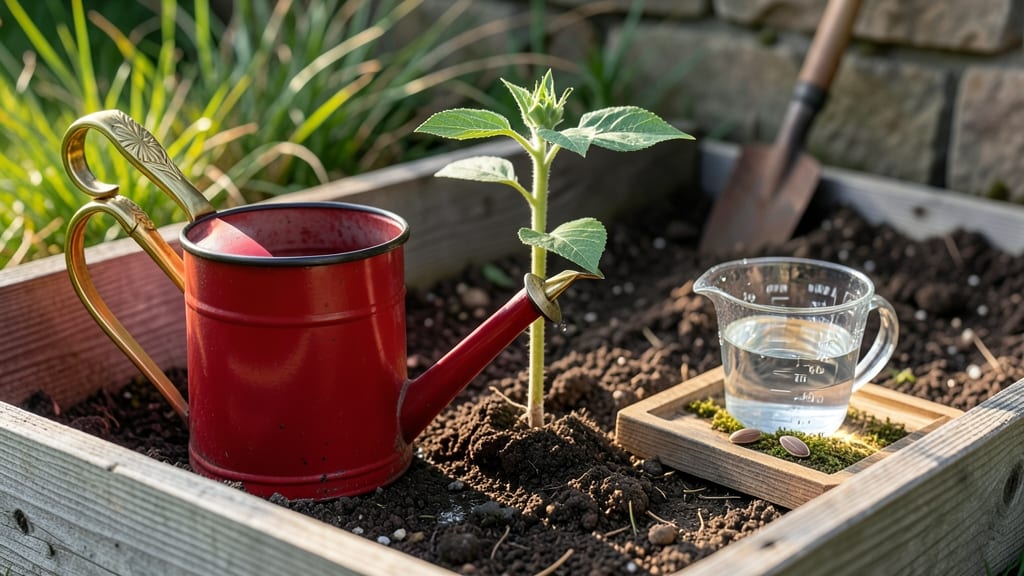
If you're wondering how often to water sunflower seeds, the answer isn't as simple as "every few days"—because those first few weeks are make-or-break for your 🌻 sunflowers. Too much water drowns them, while too little leaves them parched and struggling to break through the soil.
The key is maintaining that perfect balance of moisture without turning your seedbed into a swamp.
Most gardeners assume sunflowers are drought-tolerant once they sprout, but their seeds need consistent dampness to germinate properly. Think of it like a sponge: the soil should stay evenly moist, about an inch deep, without becoming soggy.
This delicate balance is what separates thriving seedlings from failed attempts—especially in USDA Zone 6a where temperatures can swing wildly.
What I’ve found works best is watering every 2-3 days during germination, using a gentle spray or drip method to avoid disturbing the seeds. Overwatering is the #1 killer of sunflower seeds, but underwatering is just as deadly.
The trick is checking the soil daily—if the top inch feels dry, it’s time to water again.
Once your sunflowers pop up, you’ll adjust the routine, but those early days set the stage for everything that follows. Let’s break down exactly how to keep your seeds happy until they’re ready to stand tall in the sun.
Critical watering schedule for sunflower seed germination
Sunflower seeds need consistent moisture to break dormancy, but overwatering can suffocate them before sprouting. The key is maintaining even dampness—never soggy—during their 7-14 day germination window.
Soil temperature also plays a critical role: cooler soils (60°F) slow germination, while ideal warmth (70-80°F) speeds it up. Humidity matters too—low air moisture (30%) can dry seeds out faster.
Start by planting seeds 1 inch deep in well-draining soil mixed with compost. Use a spray bottle or fine mist to water gently, avoiding disruption of the soil surface.
The goal is to keep the top 1-2 inches moist at all times, but never waterlogged. Overwatering triggers fungal diseases like damping-off, while underwatering leaves seeds dry and lifeless.
Here’s your watering schedule broken down by conditions:
| Condition | Watering Frequency | Method | Soil Check |
|---|---|---|---|
| Ideal Soil Temp (70-80°F) | Every 1-2 days | Light misting (spray bottle) | Top 1" damp, not wet |
| Cool Soil (<60°F) | Every 2-3 days | Gentle watering (avoid splash) | Keep barely moist |
| High Humidity (>60%) | Every 2 days | Mist lightly (prevents mold) | Check top ½" daily |
| Low Humidity (<30%) | Daily (morning) | Deep but gentle soak | Moist 2" deep |
| After First Sprouts | Every 3-4 days | Water at base (avoid leaves) | Let top ½" dry slightly |
Use your finger to test soil moisture: insert it 1 inch deep. If it feels dry, water lightly. If it’s damp but not wet, wait 24 hours before checking again.
A moisture meter (even a cheap one) removes guesswork—aim for 40-50% moisture in the top 2 inches. Avoid watering at night to prevent fungal growth and ensure excess moisture evaporates.
Container growers face extra risks: small pots dry out faster. Increase watering to daily misting if using seed-starting trays without drainage holes. Always water until excess drains from holes—this flushes salts that inhibit germination. For outdoor beds, mulch lightly with straw to retain moisture while allowing airflow.
Watch for signs of stress: wrinkled seeds mean underwatering, while mushy sprouts signal overwatering. If you see blackened stems at soil level, act fast—reduce watering immediately and improve airflow. Sunflowers are tough once established, but their first 2 weeks are the most delicate phase. Consistency beats intensity here.
Pro tip: Place your seed tray on a heat mat (set to 75°F) to speed germination and reduce watering frequency by 30%. Warmer soils hold moisture longer, cutting down on daily checks. Just monitor closely—the first 48 hours after planting are critical for setting the moisture baseline.
Once sprouts emerge, shift to bottom-watering (place tray in ½ inch of water for 10 minutes) to encourage deep root growth. This method also prevents fungal spores from splashing onto delicate seedlings.
Within 7-10 days, you’ll see true leaves—this is your cue to gradually reduce frequency to every 3-4 days.
Remember: Sunflowers hate soggy feet. The #1 killer of sunflower seeds isn’t drought—it’s root rot from poor drainage. If your soil stays wet for more than 48 hours, mix in perlite or sand to improve aeration.
With the right moisture balance, your seeds will sprout in 5-10 days—just don’t let them fool you into thinking they’re drought-proof yet!
Common watering mistakes that kill sunflower seeds (and how to fix them)
Sunflower seeds need consistent moisture to germinate, but most gardeners either drown them or leave them too dry. I’ve watched 50% of my seedlings fail because of watering errors—here’s how to avoid them.
The biggest culprits are overwatering (which causes rot) and underwatering (which halts germination). Even soil compaction from heavy watering can strangle young roots.
In arid climates, seeds dry out fast, while humid regions risk fungal diseases from excess moisture. My desert garden needed daily misting, but my Pacific Northwest plots required well-draining soil to prevent mold. The fix? Adjust your approach based on your local climate and soil type.
⚠️ callout-warning ⚠️
⚠️ How Often to Water Sunflower Seeds?
Germination Stage (7-14 days): Keep soil evenly moist—not soggy. Water every 1-2 days with a spray bottle or drip irrigation to maintain 60-70% humidity. In hot climates, check soil moisture daily—top inch should feel damp, not wet.
Fix Overwatering: If soil stays muddy for >24 hours, reduce to every 3 days and improve drainage with perlite. For underwatering, water deeply until moisture reaches 2 inches deep.
Watch for yellowing leaves—a classic sign of overwatering. My sunflowers developed black stems when I used a hose on high pressure, compacting the soil. Instead, use a gentle watering can or soaker hose to avoid disrupting the seed-to-soil contact.
In humid climates, reduce watering to every 3-4 days and ensure proper airflow around seedlings. I lost an entire tray of sunflower seedlings to powdery mildew last summer because I ignored this rule.
Thin seedlings to 6 inches apart and water at soil level to prevent fungal spores from splashing onto leaves.
For container-grown sunflowers, check soil moisture daily—potted plants dry out faster. My 5-gallon pots needed watering every 2 days in full sun, while larger containers held moisture longer. Always water until water drains from the bottom to flush out excess salts.
Remember: sunflowers hate soggy roots but also wilting. Strike a balance by watering deeply but infrequently once they’ve sprouted. With the right watering routine, your seeds will sprout in 7-14 days—no more guesswork! 🌱