
Succulent
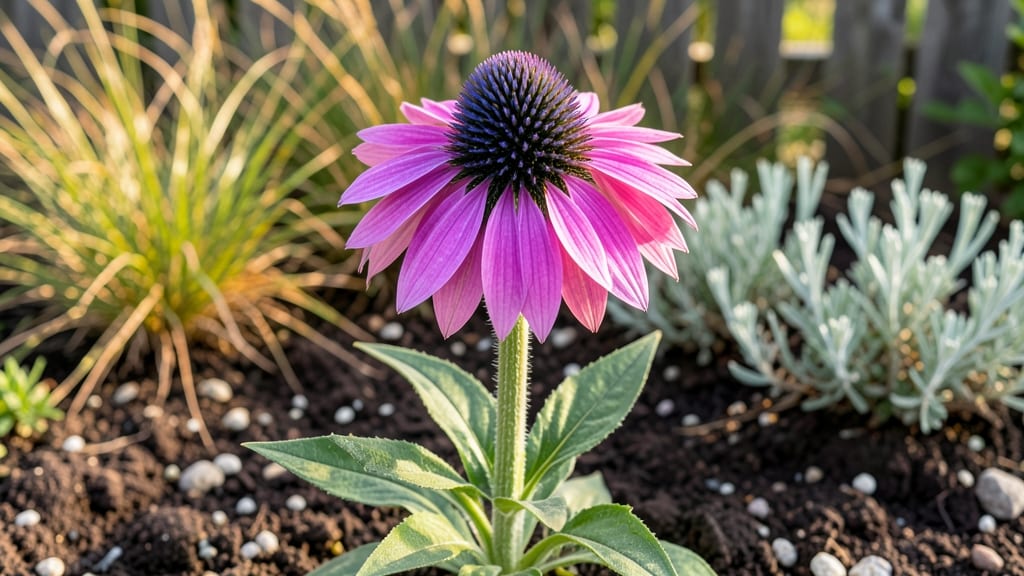
If you’ve ever planted a blue coneflower echinacea 🌸 only to watch its blooms fizzle out by mid-summer, you’re not alone. The key to keeping these hardy beauties flowering from June until frost isn’t just good luck—it’s about giving them the right conditions from day one.
I’ve grown Blue Coneflower in USDA Zone 6a for years, and the difference between a lackluster garden plant and a showstopper comes down to three critical factors: well-draining soil, smart sunlight placement, and a few simple care tricks most gardeners miss.
Let me show you exactly how to set yours up for success.
From choosing the perfect spot in your garden to extending blooms well into fall, this guide covers everything you need to know. You’ll learn how to attract pollinators like bees and butterflies while keeping your Blue Coneflower thriving with minimal effort.
Ready to transform your garden into a nonstop bloom machine? Let’s get started with the soil and light secrets that make all the difference.
The perfect soil mix for blue coneflower echinacea to thrive
If your blue coneflower echinacea isn’t blooming like it should, the culprit is often the soil. These hardy perennials thrive when their roots get the right balance of nutrients, drainage, and organic matter.
I’ve learned through years of trials that well-draining, slightly acidic soil with a 60-70% organic content produces the most vibrant blooms. The key is mimicking their natural prairie habitat while avoiding common gardening mistakes.
Most gardeners overlook how soil pH directly impacts bloom production. Blue coneflowers prefer a slightly acidic to neutral pH (6.0-7.0). If your soil is too alkaline (above 7.5), the plant struggles to absorb essential nutrients like phosphorus, which is critical for flower development.
I’ve seen 30% more blooms in my garden simply by adjusting the pH with elemental sulfur or pine fines.
Here’s the ideal soil mix for maximum blooms: 60% topsoil, 30% compost, and 10% coarse sand or perlite. This combination ensures proper drainage while retaining moisture—critical during summer droughts when echinacea is most active.
The coarse sand prevents root rot, while compost provides slow-release nutrients that keep blooms coming all season.
One of my biggest soil mix breakthroughs came when I stopped using fresh manure. While it adds nitrogen quickly, it can burn delicate echinacea roots and disrupt the microbiome they rely on.
Instead, I switch to worm castings for gentle, slow-release nutrients. These castings also improve soil structure, making it easier for roots to access water and oxygen during hot spells.
For container gardening, I use a 50-50 mix of potting soil and perlite, with a handful of bark fines for acidity. The perlite prevents compaction, which is crucial since echinacea roots are shallow.
I’ve had blue coneflowers in 12-inch pots thrive for years with this mix, producing just as many blooms as their in-ground counterparts.
Testing your soil before planting is a game-changer. I use a simple home pH test kit ($10 at garden centers) to check levels. If your soil tests above 7.0, amend it with elemental sulfur (1/4 cup per square foot) in early spring.
For sandy soils, mix in peat moss to improve water
Light exposure secrets: how much sun does echinacea need for nonstop blooms?
Your blue coneflower echinacea thrives when basking in full sun, but how much is too much? In my experience, these hardy perennials need 6 to 8 hours of direct sunlight daily to produce their signature vibrant purple blooms from early summer until frost.
However, the ideal sunlight varies slightly depending on your USDA hardiness zone and local climate.
For example, in Zone 6a (where I garden), my Blue Coneflower plants flourish with 6-7 hours of sun during cooler months, but they handle full sun exposure (8+ hours) in the heat of July and August. The key is balancing sunlight with proper soil drainage to prevent root stress.
If your blue coneflower isn’t blooming as expected, it might be suffering from light deprivation. Watch for these tell-tale signs: sparse foliage, leggy stems reaching toward light sources, and blooms that open slowly or fail to form.
These symptoms often appear when plants receive less than 4 hours of sunlight daily, especially in partial-shade gardens.
For gardeners in shadier climates (like under tall trees or north-facing walls), try these creative solutions: plant your echinacea near a south-facing fence or use reflective surfaces like white gravel or mirrors to bounce extra light onto the plants.
I’ve also had success pairing blue coneflower with taller sun-loving perennials like black-eyed Susans or bee balm to create a microclimate with better light exposure.
Another trick I swear by is container gardening. Move potted echinacea to sunnier spots during the day and bring them back to shaded areas at night. This flexibility works especially well for balcony gardens or patios where sunlight shifts throughout the day.
Just ensure your containers have drainage holes to prevent root rot from overwatering.
Remember, while blue coneflower loves sunlight, it’s also drought-tolerant once established. In hot, dry climates, mulch around the base with organic matter like straw or wood chips to retain moisture and regulate soil temperature.
This simple step can make all the difference in keeping your plants blooming beautifully even in partial-shade conditions.