
Size
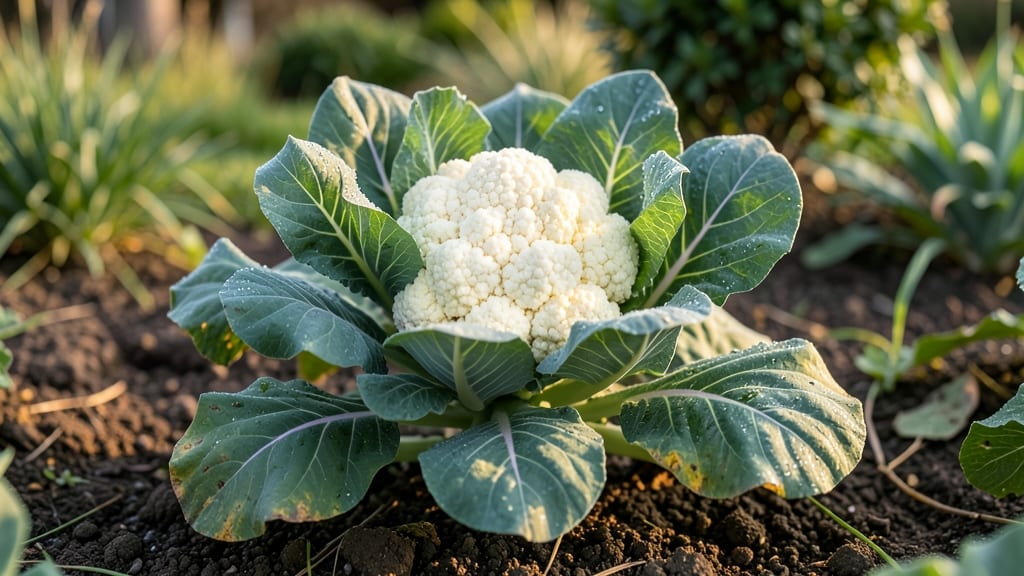
Most home gardeners assume all cauliflower varieties mature at the same pace, but the truth is, some types like 'Snowball Y Improved' reach harvest in as little as 60 days, while others like 'Romanesco' take closer to 100 days.
The difference comes down to variety selection, soil conditions, and even how much sunlight your plants get.
If you're planting in Zone 6a like I do, timing your March-April start just right ensures you'll be harvesting in late summer—just as the heat begins to ease.
But here's the kicker: even with the right timing, small mistakes like inconsistent watering or poor soil prep can stretch that growth timeline by weeks.
I'll walk you through exactly how to track your cauliflower's progress, which varieties grow fastest, and the simple care tricks that keep your plants on schedule for a bumper harvest. Let's get those heads forming efficiently!


Cauliflower growth timeline: seed to harvest stages explained
Growing cauliflower from seed to harvest is a rewarding journey that typically takes 70 to 100 days, but the exact timeline depends on the variety and growing conditions. Understanding each growth phase helps you track progress and adjust care for a perfect harvest.
Whether you're growing Snowball, Purple, or Romanesco, knowing what to expect at each stage ensures you don’t miss the window for that crisp, nutty head.
Let’s break down the four key stages of cauliflower growth—from seed germination to maturity—and how to optimize each phase for the fastest, healthiest harvest. Timing is everything, especially when you’re eager to enjoy homegrown cauliflower straight from your garden!
The first stage, seed germination, is all about creating the right conditions for your seeds to sprout. Cauliflower seeds need warm soil (60–70°F) and consistent moisture to break dormancy. I’ve found that pre-soaking seeds for 4–6 hours before planting boosts germination rates, especially in cooler climates.
Once sprouted, seedlings emerge in 5–10 days, but this can stretch to 2 weeks if soil temperatures dip below 55°F.
After germination, your cauliflower enters the seedling phase, which lasts about 2–3 weeks. During this time, focus on hardening off seedlings if you’re transplanting outdoors. I recommend moving them to a shaded area for a week before full sun exposure to avoid shock.
Seedlings need 4–6 hours of sunlight daily and should be spaced 18–24 inches apart to prevent overcrowding, which can stunt head development.
Once seedlings are established, they’ll enter the head formation stage, the most critical phase for determining harvest timing. This stage typically takes 30–45 days, depending on the variety.
For example, Snowball Y Improved varieties form heads faster (30 days), while Romanesco varieties may take up to 45 days due to their complex fractal patterns.
During this phase, ensure your plants receive consistent watering (1–1.5 inches per week) and balanced fertilization (5-10-10 NPK) to encourage robust head growth.
For Purple cauliflower varieties, head formation is particularly sensitive to temperature fluctuations. If nights dip below 50°F, the heads may turn yellow or fail to form properly. I’ve had success using row covers or black plastic mulch to maintain soil warmth during cooler evenings.
Additionally, tying the outer leaves together with a rubber band or twine helps protect the developing head from sun exposure, which can cause discoloration.
The final stage is maturity and harvest, which occurs 20–30 days after head formation. You’ll know your cauliflower is ready when the head is firm, compact, and tightly closed, with vibrant color. Avoid letting florets open, as this signals the plant is past its prime.
For Romanesco, harvest when the spirals are fully formed but still tight—this usually takes 90 days total from seed. If you’re growing in a shorter season, opt for faster varieties like Graffiti or Cheddar, which mature in as few as 60–70 days.
One common mistake I see is overlooking soil
How to speed up or slow down cauliflower growth naturally
Cauliflower growth speed isn’t set in stone—it’s all about tweaking your garden’s conditions to match your timeline. Whether you’re racing to harvest before summer heat or extending the season in cooler climates, these natural methods give you control.
The key lies in soil warmth, sunlight exposure, and consistent moisture, all of which directly impact how quickly your plants form those coveted heads.
For faster growth, focus on optimal soil temperatures (60-75°F) and maximum sunlight, while slowing down requires shade and cooler roots. But beware—overdoing it can lead to bolting or blind stems, where your plant puts energy into leaves instead of heads.
Let’s break down the proven tricks to adjust your cauliflower’s growth clock without synthetic shortcuts.
🌱 5 Natural Ways to Control Cauliflower Growth
- 🌡️ Warm soil = faster growth: Use black plastic mulch or plant in south-facing beds to raise soil temps by 10-15°F. Ideal for 70-day varieties like 'Snowball Y Improved'.
- ☀️ Max sunlight = bigger heads: Place plants in full sun (6+ hours) for 20% faster head formation. Move containers daily if needed.
- 💧 Deep watering = steady growth: Water 1-1.5 inches weekly at soil level to prevent stress. Drought causes bolting in 3-5 days.
- ❄️ Row covers = slower, cooler growth: Use floating row covers to block 20% sunlight and lower temps by 5-10°F—perfect for fall planting.
- 🌱 Avoid over-fertilizing: Too much nitrogen (NPK 10-10-10) delays heads by 10-14 days. Use low-nitrogen fertilizer (5-5-5) instead.
One of my biggest mistakes was assuming more fertilizer always meant faster growth—until I realized my cauliflowers were putting all their energy into leafy greens instead of forming heads. The fix? Switching to a balanced organic fertilizer (like 5-5-5) and focusing on consistent watering at the base of the plant.
Even small adjustments like these can shave 10-15 days off your harvest timeline.
For cooler climates, I’ve found that planting in shaded beds (under 30% shade cloth) slows growth just enough to avoid summer bolting while still producing heads by late fall.
The trick is monitoring leaf color—if they start turning yellow, your plant’s stressing, and growth will stall. Always check soil moisture first before assuming temperature is the issue.
Pro tip: If you’re growing Purple or Romanesco varieties, they naturally grow slower than white cauliflower. To compensate, I plant them in warmer microclimates (like near a south-facing fence) and use compost-rich soil to boost nutrient uptake.
This combo helps them catch up to standard varieties in 85-95 days instead of 100+.
Remember, cauliflower growth is a delicate balance. Push too hard for speed, and you’ll end up with small, loose heads. Play it too safe, and you’ll miss your harvest window entirely.
The sweet spot? Consistent conditions—whether you’re rushing or slowing the process—will give you the best results every time. 🌿