
Light Requirements
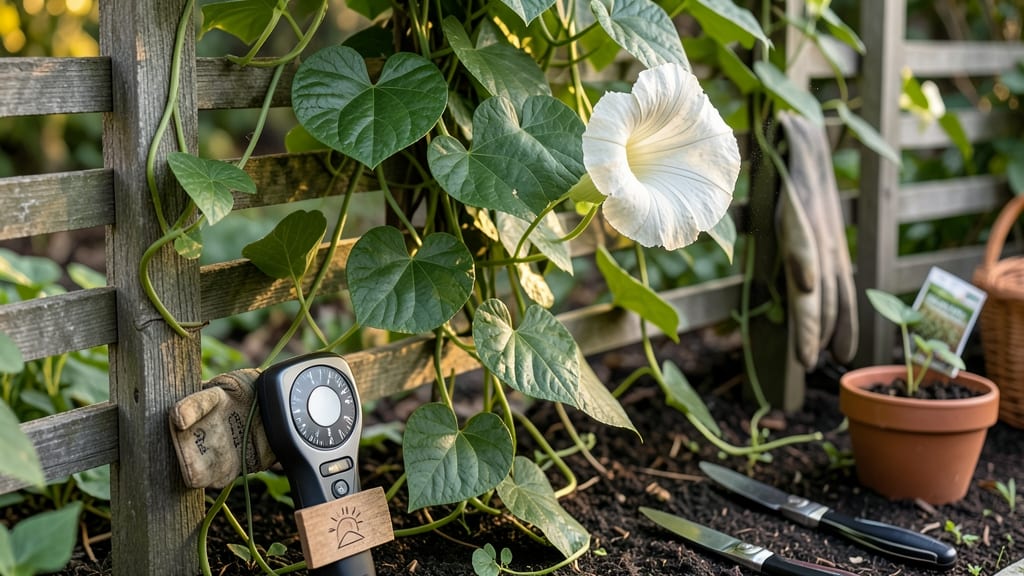
If you're dreaming of fragrant, moonlit blooms from your Moonflower 🌙 vines, you might be wondering whether they do moonflowers need full sun or can handle partial shade.
The truth is, while they love sunlight, their needs are more flexible than you'd think—and getting it right could mean the difference between a showstopping display and sparse, underwhelming flowers.
Moonflowers thrive best with 6+ hours of sunlight daily, but they're surprisingly adaptable. In hotter climates like USDA Zone 6a, they can even tolerate some afternoon shade to prevent wilting.
The key is balancing their love for light with your garden's conditions—because even a little shade can dramatically reduce their night-blooming magic.
Let me show you exactly how to position your Moonflowers for maximum blooms, whether you're working with a sunny patch, dappled shade, or even a container setup.
You'll learn the subtle signs that your plant is getting just the right amount of light—and how to adjust if things aren't quite right.
From choosing the perfect planting spot to troubleshooting common light-related issues, this guide will help you grow Moonflowers that burst into fragrant, nocturnal beauty every summer. Ready to transform your garden into a nighttime spectacle?

Moonflower light requirements: full sun vs. partial shade explained
Moonflowers (Ipomoea alba) are night-blooming vines that thrive under specific light conditions. While they prefer full sun for maximum blooms, they can tolerate partial shade—though this often reduces their fragrant displays.
Understanding their light needs is key to growing these nocturnal beauties successfully in USDA zones 8-11.
In their native tropical regions, moonflowers receive 6-8 hours of direct sunlight daily. This sunlight triggers the photosynthesis needed for robust vines and abundant blooms. However, their ability to adapt to partial shade makes them versatile for various garden settings, from sunny patios to dappled woodland edges.
Here’s how sunlight affects moonflowers: full sun promotes vigorous growth and frequent blooming, while partial shade may result in slower vine growth and fewer flowers. The trade-off? Shade can protect delicate leaves from scorching heat in hot climates like USDA zone 10-11.
🌙
| Light Condition | Growth Result | Bloom Frequency | Ideal USDA Zones | Best For |
|---|---|---|---|---|
| Full Sun (6+ hours) | Fast, vigorous vines (10-15 ft) | Abundant, frequent blooms | 8-11 (all zones) | Sunny patios, trellises, fences |
| Partial Shade (3-6 hours) | Slower growth (6-10 ft) | Moderate blooms, fewer flowers | 9-11 (hotter climates) | Woodland edges, east-facing walls |
| Deep Shade (<3 hours) | Leggy, weak vines (3-6 ft) | Sparse or no blooms | Not recommended | Avoid for moonflowers |
In USDA zone 8, moonflowers can handle afternoon shade to avoid heat stress, while zone 11 gardens benefit from morning sun and afternoon shade to prevent leaf burn. The key is balancing sunlight with temperature control, especially in hot climates.
Moonflowers in partial shade may produce smaller leaves and fewer blooms, but they still offer fragrant evenings. If you’re growing them in containers, place them where they receive at least 4-6 hours of morning sun for best results.
For maximum fragrance, aim for full sun exposure. Even in partial shade, supplement with a south-facing trellis to ensure vines receive direct light for 6+ hours daily. This simple adjustment can double your bloom count.
If your moonflowers are in partial shade, monitor their leaf color. Pale or yellowing leaves signal insufficient light, while dark green leaves indicate they’re thriving. Adjust their position gradually to avoid sunburn.
🌿
In USDA zone 9-10, moonflowers can thrive with filtered sunlight under trees, but they’ll need regular pruning to encourage bushier growth. Pair them with sun-loving companions like morning glories or passionflowers for a vibrant vertical garden.
Remember, moonflowers are annuals in most climates, so focus on one season’s success. With the right light conditions, you’ll enjoy their magical nighttime blooms from June through September.
How to optimize Moonflower growth in different light conditions
Moonflowers may love sunlight, but their adaptability makes them perfect for gardens with varying light conditions. In full sun, they produce the most abundant blooms, but partial shade can still yield beautiful results if you adjust your care routine.
The key is understanding how to maximize their potential in each scenario—whether you're working with a sunny patio, a shady trellis, or even an indoor setup.
Let’s break down the best practices for each light condition. I’ll show you how to position your vines, when to prune for better airflow, and which companion plants will enhance their growth.
You’ll also learn seasonal adjustments to keep your moonflowers thriving from spring through fall, no matter where they’re planted.
Full Sun (6+ Hours)
Plant in south-facing areas for maximum blooms. Use trellises or fences to support their 10-15 ft vines. Prune leggy growth in late summer to encourage bushier plants.
Partial Shade (3-6 Hours)
Choose morning sun with afternoon shade to prevent wilting. Mulch heavily to retain moisture. Expect fewer blooms but healthier foliage.
Indoor Growing
Place near south-facing windows with grow lights (12+ hours/day). Rotate pots weekly for even growth. Use lightweight trellises for vertical support.
For full sun conditions, focus on providing consistent moisture and well-draining soil. Moonflowers in direct sunlight will reward you with larger, more fragrant blooms, but they’ll also need regular pruning to prevent overcrowding.
I recommend training them along a sturdy trellis or pergola to keep vines off the ground and improve airflow.
In partial shade, prioritize morning sunlight to kickstart their growth. If your garden only offers afternoon shade, consider supplementing with a reflective surface (like a white wall) to maximize light exposure. Pair moonflowers with shade-tolerant companions like ferns or impatiens to create a lush, layered display.
Growing moonflowers indoors requires extra attention to light. If natural light is limited, invest in a full-spectrum LED grow light and keep it 6-12 inches above the plants.
Rotate the pots daily to prevent lopsided growth, and use a moisture meter to avoid overwatering—indoor conditions can dry out faster than outdoor beds.
Seasonal adjustments are crucial for peak performance. In spring, fertilize lightly to encourage vine growth, while in summer, reduce watering slightly to prevent fungal issues. As fall approaches, prune back any dead foliage and harvest seeds from spent blooms for next year’s garden.
With these tailored strategies, your moonflowers will thrive regardless of light conditions—turning your garden into a fragrant, nocturnal paradise every summer. 🌙