
How To
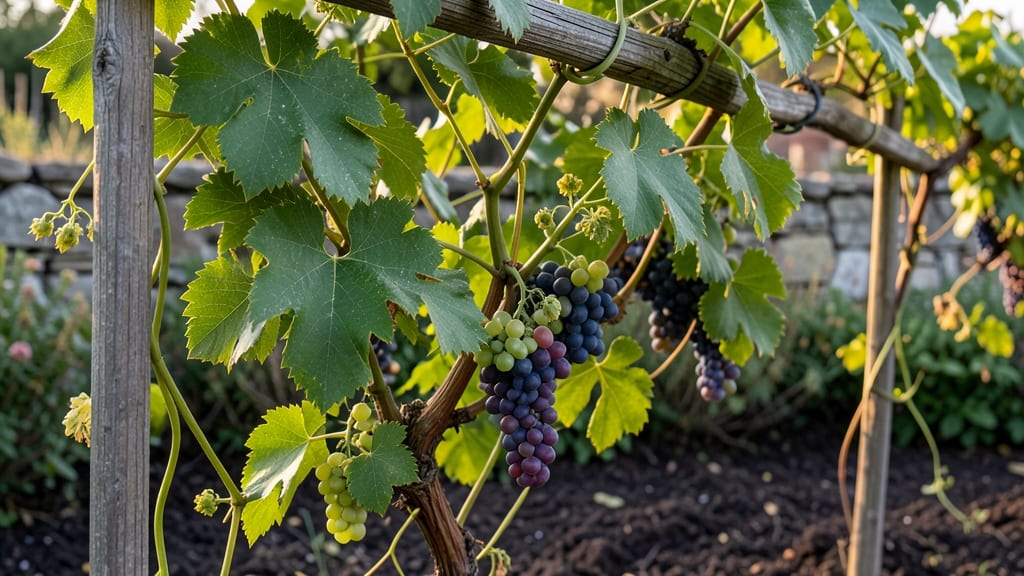
After those delicate 🍇 grape flowers appear, you might be wondering how long do grapes take to grow after flowering before you’ll see those plump clusters ready for harvest.
The answer isn’t one-size-fits-all—because while most varieties need 5 to 8 weeks after flowering to ripen, heat, water, and even your pruning choices can shift that timeline dramatically.
If you’re growing grapes in USDA Zone 6a, cooler temperatures might stretch that window closer to 10-12 weeks, while warmer climates could speed things up.
The key is understanding the stages—from berry set to that satisfying color change—so you can tell exactly when your grapes are ready to pick.
Let’s break down the real factors that affect ripening time, including how to spot ripe grapes before they overripe. Whether you’re growing table grapes or wine grapes, this is the info you need to time your harvest perfectly.
You’ll also discover how to adjust your care routine if your grapes aren’t progressing on schedule. No more guessing—just a clear, step-by-step guide to a successful harvest.


Grapes growth timeline after flowering: week-by-week breakdown
Once your grapevine flowers burst into bloom, the real magic happens in the following 5-8 weeks. This is when tiny blossoms transform into plump, flavorful berries. Understanding each stage helps you predict harvest dates and spot problems early.
From berry set to veraison, every week brings visible progress—if you know what to watch for.
The journey from flower to fruit follows a predictable timeline, though variety and climate can shift this window by 1-2 weeks. Table grapes like Thompson Seedless often ripen faster (6-7 weeks) than wine grapes like Cabernet Sauvignon (8-10 weeks).
Cooler regions may extend this timeline, while warm climates can accelerate it. Tracking these stages ensures you’re ready to harvest at peak flavor and sugar levels.
Key milestones include: Week 1-2: Berry set (tiny green berries form) Week 4: Rapid growth phase (berries double in size) Week 6-7: Veraison (color change begins) Week 8+: Sugar accumulation (ripe and ready to pick) Each phase demands slightly different care to avoid issues like shatter (berry drop) or millerandage (uneven-sized berries).
| Stage | Time After Flowering | Key Visual Cues | Care Focus |
|---|---|---|---|
| Berry Set | Weeks 1-2 | Tiny green berries (pea-sized) | Prevent shatter with consistent water |
| Rapid Growth | Weeks 3-4 | Berries grow quickly, still green | Add potassium to prevent splitting |
| Veraison | Weeks 6-7 | Color change (red/purple/green) | Reduce water to concentrate sugars |
| Sugar Accumulation | Weeks 7-8+ | Firm, glossy skin; sweet taste | Monitor for pests and rot |
During weeks 1-2, you’ll notice tiny berries forming where flowers once bloomed. This is the berry set stage, and it’s critical to avoid shatter—when berries drop due to stress. Consistent watering (1-2 inches per week) and even sunlight prevent this.
If you see clusters thinning, it may signal pollination issues or heat stress. Hand-pollinate if needed by gently shaking vines on calm days.
By week 3, berries enter their rapid growth phase, doubling in size. This is when you’ll notice them turning from pea-sized to marble-sized. Nutrient needs peak during this time, so side-dress with a balanced fertilizer (10-10-10) if leaves look pale.
Watch for powdery mildew—a white fungal dust on leaves—which thrives in humid conditions. Spray with neem oil at the first sign to protect your crop.
Week 4-5 marks the transition to cell expansion, where berries firm up and prepare for flavor development. This is also when cluster thinning may be needed if grapes are too dense. Leave 1-2 inches between berries to improve air circulation and reduce disease risk. Prune suckers (shoots growing from the trunk) to redirect energy to fruit development rather than foliage.
The most dramatic change occurs during veraison (weeks 6-7), when berries shift from green to their mature color.
For red grapes, this means a deep purple hue; for green varieties like Thompson Seedless, the berries soften and develop a slight blush. Sugar accumulation ramps up during this phase, so reduce watering slightly to stress the vines just enough to concentrate flavors. This is also
Factors that speed up or delay grape ripening after flowering
After those delicate grape flowers bloom, the real magic happens—but not all vines ripen on the same schedule.
The 5-8 week window from flowering to harvest can stretch or shrink dramatically based on a few key factors. Temperature, sunlight exposure, and even your pruning habits play starring roles in whether your grapes reach peak sweetness on time or lag behind.
Understanding these variables lets you fine-tune your care routine for a reliable harvest.
Let’s break down the most critical factors that either accelerate or delay grape ripening. By addressing these head-on, you’ll turn your vineyard into a precision operation—no more guessing games about when those clusters will finally turn from green to golden or deep purple.
The secret? It’s all about creating the perfect growing conditions for your specific grape variety.
Temperature is the most dramatic player in this game. When daytime highs hit 80°F+, grapes can ripen in as little as 5 weeks—but if nights dip below 60°F, that timeline can stretch to 10+ weeks.
For example, Concord grapes thrive in cooler climates and may take longer to mature than Thompson Seedless, which craves heat. Monitor your local forecasts and adjust your expectations accordingly.
Sunlight isn’t just about brightness—it’s about consistency. Grapes need direct sunlight to convert starches into sugars. If your vineyard gets afternoon shade from trees or buildings, ripening will lag.
Try training vines along a south-facing trellis to maximize exposure. Even a few extra hours of sun can shave 1-2 weeks off your harvest timeline.
Watering might seem straightforward, but it’s a tightrope walk. Too little, and your grapes stay tart and small; too much, and you risk berry splitting or fungal diseases like powdery mildew. Aim for deep watering 2-3 times per week during hot spells, focusing on the root zone.
A simple trick? Use a moisture meter to check soil levels—grapes hate soggy feet but also can’t handle drought stress.
Pruning isn’t just about shaping your vine—it’s about optimizing airflow and sunlight access. If you’ve been heavy-handed with your pruners after flowering, your grapes might struggle to ripen evenly.
Instead, focus on light pruning to encourage airflow and reduce disease risk. And here’s a pro tip: Remove any suckers or water sprouts that steal energy from your fruit clusters.
Finally, don’t underestimate the power of soil health. A well-fed vine ripens faster and produces sweeter fruit. Conduct a soil test in early spring to check nutrient levels. If potassium is low, add greensand or a potassium-rich fertilizer like 0-0-50.
And remember: less is more when it comes to nitrogen after flowering—too much greenery means slower sugar development.