
Trees
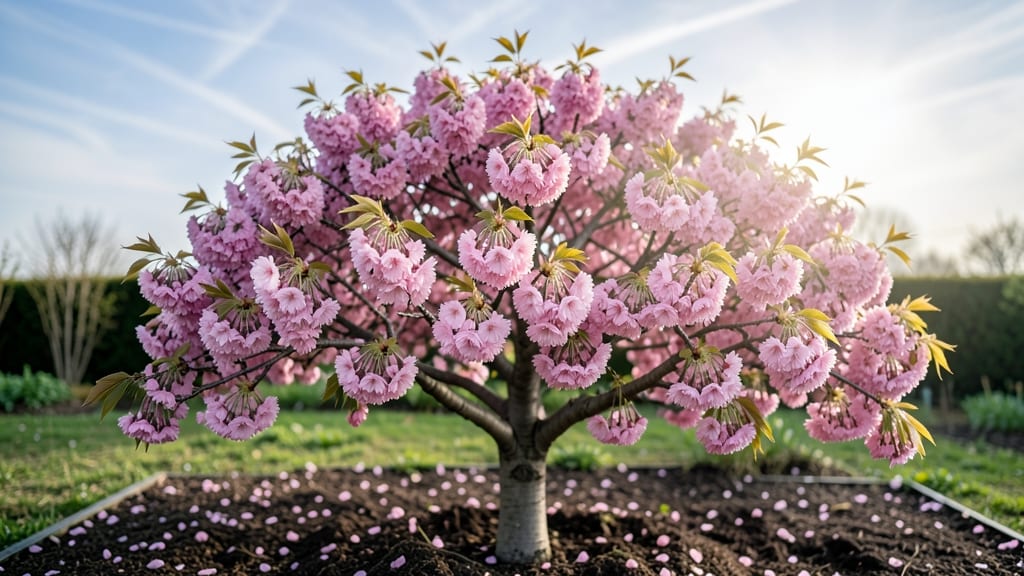
Flowering cherry tree growth rate by variety: height timeline from seedling to mature
Flowering cherry trees are among the most breathtaking spring additions to any landscape, but their growth rates can vary wildly depending on the variety and growing conditions.
Whether you're planning a backyard garden or a container planting, understanding these timelines helps you set realistic expectations for height, blooming, and landscape integration.
From the delicate Yoshino cherry to the bold Kwanzan, each variety grows at its own pace. Some reach mature height in just 10 years, while others take twice as long.
Let’s break down the annual growth expectations for popular varieties and the factors that can speed up—or slow down—your tree’s progress.
🌸 Key Factors Affecting Growth:
- Sunlight exposure (6+ hours daily for optimal growth)
- Soil quality (well-draining, slightly acidic pH 6.0-6.5)
- Climate zone (USDA zones 5-8 for most varieties)
- Watering consistency (deep soaks weekly for young trees)
- Pruning practices (avoid over-pruning in early years)
| Variety | Height at 1 Year | Height at 5 Years | Mature Height | Bloom Time | Growth Notes |
|---|---|---|---|---|---|
| Yoshino ('Amanogawa') | 2-3 ft | 10-12 ft | 25-30 ft | Early spring | Fastest grower; needs full sun |
| Kwanzan | 2-3 ft | 8-10 ft | 20-25 ft | Mid-spring | Slower growth; prefers cooler climates |
| Autumn Brilliance | 1-2 ft | 6-8 ft | 15-20 ft | Late spring | Dwarf variety; compact growth habit |
| Royal Burgundy | 2-3 ft | 10-12 ft | 20-25 ft | Early spring | Dark foliage; moderate growth rate |
| Mount Fuji | 1-2 ft | 5-7 ft | 12-15 ft | Mid-spring | Dwarf weeping form; slow but steady |
The Yoshino cherry is the fastest grower, often reaching 10 feet in just 5 years with ideal care. If you’re planting near a patio or driveway, this variety will quickly provide shade and spring color.
Meanwhile, the Kwanzan takes its time, maturing more slowly but offering stunning pink blooms that last longer.
For small spaces, Autumn Brilliance and Mount Fuji
How to adjust pruning plans based on flowering cherry growth speed
Flowering cherry trees grow at wildly different speeds depending on the variety, and your pruning strategy must adapt to avoid stunting blooms or damaging the tree.
Fast growers like 'Royal Burgundy' can shoot up 3 feet per year, while slower varieties like 'Autumn Brilliance' may only gain 1-2 feet annually.
The key is matching your pruning timing to the tree's natural growth rhythm—cut too early, and you risk losing next year's flowers; wait too long, and you risk overcrowded branches.
Pruning for flowering cherries isn't just about shaping—it's about balancing bloom production with structural health. Fast-growing varieties need more aggressive pruning to control their vigor, while slow growers require gentle shaping to encourage dense branching.
I've learned the hard way that pruning too late in the season can trigger new growth that won't harden off before winter, leaving tender branches vulnerable to frost damage.
Step-by-Step Pruning Guide by Growth Rate
Fast growers (2+ ft/year): 'Royal Burgundy,' 'Mount Fuji'
Medium growers (1-2 ft/year): 'Yoshino,' 'Kwanzan'
Slow growers (less than 1 ft/year): 'Autumn Brilliance,' 'Pink Perfection'
When: Late May to early June
Why: Removes up to 25% of new growth to control height while preserving next year's flower buds (which form on old wood)
When: Late winter (before buds swell) or early spring
Focus: Open the canopy to improve air circulation and reduce disease risk (common in dense slow-growing varieties)
First cut: Light shaping after blooming (remove dead/diseased wood)
Second cut: Structural pruning in late winter (before buds break)
Tools: Sterilize pruners with 70% rubbing alcohol between cuts
Technique: Make cuts at 45-degree angles just above outward-facing buds
Timing is everything with flowering cherries. For fast growers, I prune immediately after the spring blooms fade—this gives the tree time to establish new growth before winter. With slow growers, I wait until late winter when the tree is dormant; this prevents stressing the limited energy reserves.
Pro tip: Use a growth rate chart (like the one in my garden journal) to track annual height gains and adjust your schedule accordingly.
Never prune in summer or fall—new growth won't harden off before cold weather, and you risk losing next year's flowers. I've made this mistake with my 'Kwanzan' cherry, and the resulting winter dieback was heartbreaking.
Always prioritize disease prevention by removing crossing branches and thinning the canopy to improve airflow, especially in humid climates where fungal diseases thrive.
For maximum bloom production, focus pruning on removing suckers and thinning crowded branches rather than heavy topping. My 'Yoshino' cherry blooms spectacularly now because I've maintained an open center structure—this lets sunlight reach the inner branches where flowers form.
Remember, flowering cherries bloom on old wood, so avoid heavy pruning that removes last year's growth.