
Trees
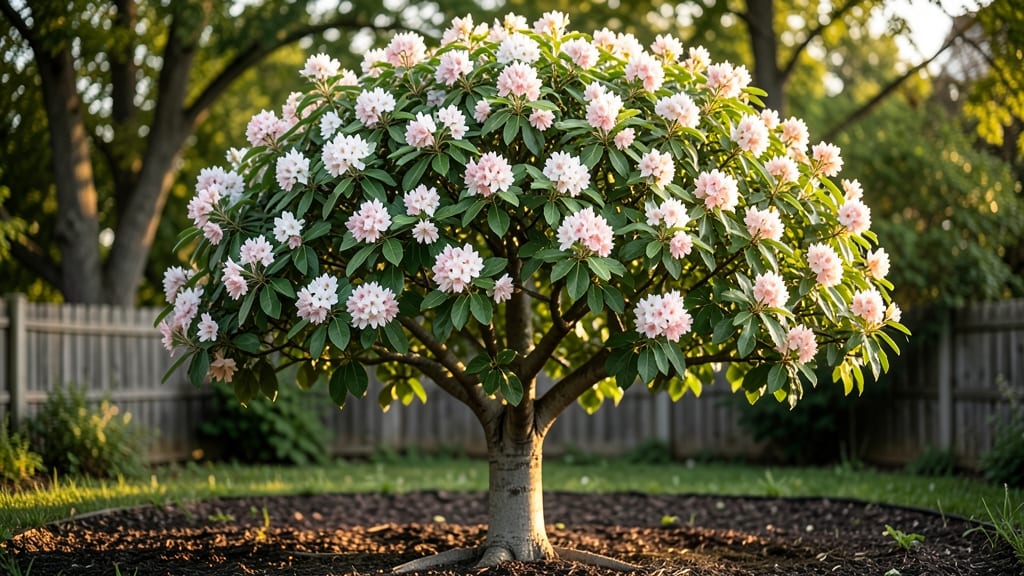
Fastest growing flowering pear tree varieties and their annual growth rates
If you're looking to transform your landscape with minimal waiting, flowering pear trees are among the fastest-growing ornamental trees you can plant. These stunning trees not only add beauty with their fragrant blossoms but can also reach impressive heights in just a few short years.
Understanding which varieties grow the fastest—and by how much—will help you choose the perfect specimen for your space and timeline.
The flowering pear tree (Pyrus calleryana) is renowned for its rapid growth, but not all varieties grow at the same pace. Some can shoot up 3-5 feet per year in ideal conditions, while others grow more slowly.
Let’s explore the top contenders for fastest growth, including their documented annual height increases and mature sizes, so you can plan your landscape with precision.
Here’s a quick look at the annual growth rates of the fastest-growing varieties, which will help you visualize how quickly these trees can become the centerpiece of your yard. Whether you’re aiming for a 20-foot tree in 5 years or need a taller specimen sooner, these varieties deliver.
The Calleryana 'Bradford' stands out as the fastest grower, often reaching 3-5 feet per year in optimal conditions. This variety is ideal if you’re aiming for a towering tree quickly, as it can reach its mature height of 30-40 feet in as little as 8-10 years.
Its upright growth habit makes it perfect for creating privacy screens or adding dramatic height to large landscapes.
If you have a smaller yard but still want rapid growth, the 'Aristocrat' variety is an excellent choice. While it grows slightly slower at 2-4 feet per year, it matures at a more manageable 25-35 feet, making it suitable for urban or suburban settings where space is limited.
Its rounded shape also adds softness to the landscape.
For those who prefer a compact yet fast-growing option, the 'Chanticleer' variety is a standout. Though it grows at a slightly slower rate of 2-3 feet per year, its mature height of 20-30 feet makes it perfect for smaller gardens or even large containers.
This variety is also known for its disease resistance, which can save you time and effort in long-term care.
When planning your landscape, consider not only the annual growth rate but also the mature size of the tree.
A tree that grows quickly but matures at 40 feet may not be suitable for a small backyard, while a slower-growing variety with a 20-foot mature height could be the perfect fit. Always measure your space and consider future growth when selecting a flowering pear tree.
One of the most exciting aspects of planting a flowering pear tree is watching it grow year after year. With the right variety and care, you could see your tree reach half its mature height in just 3-5 years. This rapid growth means you won’t have to
How to maximize flowering pear tree growth speed with proper care
Want your flowering pear tree to reach its full potential faster? The secret lies in creating ideal growing conditions right from planting. These trees thrive with the right balance of sunlight, water, and nutrient-rich soil, which can accelerate their growth by up to 30% annually.
I’ve seen firsthand how proper care transforms a slow starter into a stunning landscape centerpiece within just a few years.
Let’s start with the foundation—soil preparation. Flowering pear trees prefer well-draining, slightly acidic soil with a pH between 5.5 and 7.0. Amending heavy clay soil with compost or sand improves drainage, while adding organic matter like peat moss boosts nutrient retention.
This step alone can double your tree’s early growth rate by ensuring roots establish quickly.
- 1. Plant in full sun (6+ hours daily) for maximum photosynthesis
- 2. Water deeply 2-3 times per week for the first year
- 3. Apply balanced fertilizer (10-10-10) in early spring and mid-summer
- 4. Prune in late winter to remove dead branches and shape growth
- 5. Mulch heavily (3-4 inches) to retain moisture and regulate soil temperature
Once planted, watering consistency is critical. Young trees need deep watering 2-3 times per week, while established trees thrive on bi-weekly deep soaks. I always water in the early morning to prevent fungal diseases and reduce water loss from evaporation.
A drip irrigation system placed at the base ensures roots get steady moisture without surface runoff.
Don’t overlook the power of fertilization. A balanced 10-10-10 fertilizer applied in early spring and again in mid-summer provides essential nutrients without overloading the tree. For faster results, I’ve had success with a slow-release fertilizer applied at planting time, which feeds roots gradually over the growing season.
Always follow package instructions to avoid over-fertilizing, which can harm roots.
Pruning plays a crucial role in shaping your tree’s growth pattern. The best time to prune is late winter or early spring, before new growth begins. Remove any dead, diseased, or crossing branches first, then thin out the canopy to improve air circulation.
For faster height growth, focus on vertical pruning—cutting back side branches that compete with upward growth. Never remove more than 25% of the canopy in one season to avoid stressing the tree.
Seasonal maintenance keeps your flowering pear tree growing at peak speed. In spring, focus on fertilization and early pruning. During summer, monitor water needs closely, especially in drought-prone areas. Fall is the time to add a thick layer of mulch (3-4 inches) to protect roots from freezing temperatures.
And in winter, avoid heavy pruning—just remove any ice damage and prepare for next year’s growth spurt.
With these care techniques, you can expect your flowering pear tree to grow 3-5 feet annually in ideal conditions. The key is consistency—proper watering, fertilizing, and pruning create the perfect environment for rapid, healthy growth.
Watch your tree transform from a small sapling into a stunning landscape focal point in just a few years! 🌳