
Vegetables
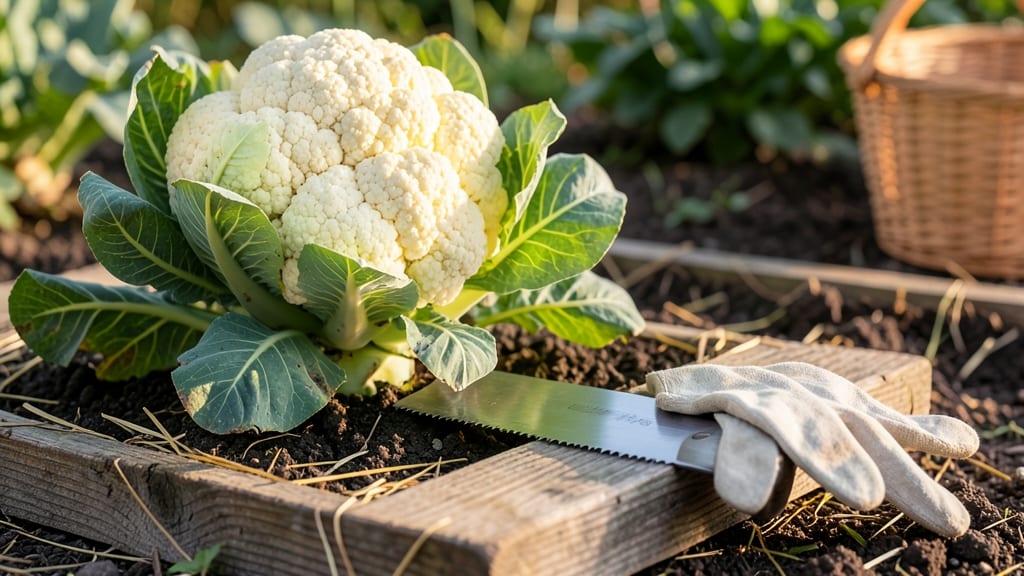
Timing your harvest time for cauliflower can mean the difference between a crisp, flavorful 🥬 and a bitter, loose disappointment. You’ve nurtured your plants for months, and now it’s all about knowing exactly when to pull that perfect head.
Most gardeners wait 70-100 days after planting, but that’s just the starting point. The real secret lies in watching for visual cues—like a firm, compact head that’s 6-8 inches wide—and avoiding common mistakes that ruin texture or taste.
In this guide, I’ll walk you through the best signs to harvest, how to cut your cauliflower without damaging the plant, and even how to store it for maximum freshness. Whether you’re in USDA Zone 6 or beyond, these tips will help you get the most out of your crop.
Ready to turn your garden into a flavor-packed harvest? Let’s dive into the details so you never miss the perfect moment again.

How to identify the perfect time to harvest cauliflower curds
Harvesting cauliflower at the right moment transforms your garden into a flavor factory—crisp, tender curds packed with sweetness. But timing is tricky: one wrong move, and you’re left with loose, bitter, or discolored heads.
The secret lies in watching for three key visual and tactile cues: head size, leaf condition, and firmness. Let’s break down how to spot the perfect harvest window before your curds turn into overripe disappointment.
First, focus on the head diameter. A ready-to-harvest cauliflower typically measures 6-8 inches across, though dwarf varieties may be smaller. The head should feel dense and heavy for its size—if it feels light, it’s likely still developing.
Pro tip: Check the outer leaves surrounding the curd. They should remain tightly wrapped and vibrant green, not yellowing or loosening.
🌱 Cauliflower Harvest Checklist at a Glance
| Cue | Ready Signs | Not Ready Signs |
|---|---|---|
| Head Size | 6-8" diameter, firm | Small, loose, or uneven |
| Leaf Color | Bright green, tightly wrapped | Yellowing or opening |
| Curd Firmness | Solid, snaps cleanly | Soft, spongy, or hollow |
| Bud Stage | Before buds open | Buds visible or flowering |
| Stem Test | Snaps easily at base | Resists or tears |
⏰ Pro Tip: Harvest in the morning when curds are crispest and flavors peak.
Don’t overlook the color consistency of your cauliflower head. A perfectly ripe curd should display a uniform creamy-white or pale green hue, depending on the variety. If you notice yellowing or brown spots, your cauliflower has overstayed its welcome—these are signs of bitterness or bolting.
Purple varieties should maintain their vibrant hue without fading to dull tones.
For a foolproof test, perform the stem snap test. Gently twist the stem near the base of the head. If it snaps cleanly with minimal resistance, your cauliflower is ready. If the stem bends or tears, it’s not quite time.
This tactile check is especially useful for oversized heads, which may look ready but lack the internal firmness of a properly matured curd.
Regional variations can slightly alter harvest timing. In cooler climates (Zones 3-5), cauliflower often matures 2-3 weeks earlier than in warmer zones. Conversely, hotter regions (Zones 7-10) may see heads develop faster but require shade cloth to prevent bolting.
Always adjust your expectations based on your local last frost date and average summer temperatures.
One of the biggest mistakes gardeners make is waiting until the head splits open. By this point, the curd has already begun to loosen and lose flavor. Instead, harvest 1-2 days before you see buds forming.
This ensures you capture the tightest, sweetest curds possible. For continuous harvests, opt for self-blanching varieties like ‘Snowball’ or ‘Purple of Sicily’, which naturally protect the head from sunlight.
Pay attention to the weather forecast in the days leading up to harvest. If heavy rain or high winds are predicted, it’s best to harvest early. Wet conditions can dilute flavor and encourage rot, while wind may cause the head to loosen prematurely.
Always harvest on a dry, sunny morning to preserve quality and make cleaning easier.
Finally, remember that not all cauliflower heads are created equal. Some varieties, like Romanesco, develop fractal-like patterns and may take longer to reach harvest size.
Others, like broccolini hybrids, produce smaller, more tender curds. Familiarize yourself with your specific variety’s maturity timeline—usually listed on seed packets—to fine-tune your harvest strategy.
Mastering the art of harvesting cauliflower is all about observation and timing. By focusing on head size, leaf condition, and firmness, you’ll consistently bring home perfectly formed, flavorful curds that outshine store-bought every time.
Once you’ve nailed the harvest, stay tuned for our next section on how to cut cauliflower without damaging the plant—or even encouraging regrowth for a second harvest! 🌿
Step-by-step guide to harvesting cauliflower without damaging the plant
Once your cauliflower heads reach maturity, knowing how to harvest them properly ensures you get the tastiest, firmest curds while keeping your plant healthy for potential regrowth. The key is precision—cutting too deep or too shallow can stress the plant or ruin your harvest.
Here’s my foolproof method for harvesting cauliflower without damage, whether you’re dealing with perfect-sized heads or oversized monsters.
Before you grab your pruning shears, gather a few essentials: a sharp knife or clean scissors, a bowl of cool water to soak the head (optional but recommended), and a spray bottle with water.
Work on a dry, sunny day when the plant is firm and hydrated. This isn’t just about timing—it’s about technique to avoid stressing the plant or inviting pests into fresh cuts.
How to Harvest Cauliflower in 5 Simple Steps
- 1 Locate the stem: Identify the thick white stem connecting the head to the plant. This is your cutting point—never cut into the green leaves or you’ll damage the plant’s ability to produce side shoots.
- 2 Make a clean cut: Position your knife or shears at a 45-degree angle, about 1 inch below the head. Slice through the stem cleanly—no jagged edges—to prevent rot. For oversized heads, cut the largest curd first to redirect energy to smaller side shoots.
- 3 Encourage regrowth: After cutting, trim any yellow or wilted leaves around the base. The plant may produce 2-3 smaller side shoots in 2-3 weeks if conditions (sun, water, and nutrients) are ideal. Remove any flower buds that form to keep energy focused on new curds.
- 4 Handle with care: Gently twist or lift the head to detach it from the stem. If it resists, don’t force it—wait another day. Place the head in a bowl of cool water for 10 minutes to crisp it up before storing. This step is especially critical for loose or overripe curds that need a quick refresh.
- 5 Store properly: Wrap the head loosely in a damp paper towel and store it in a perforated plastic bag in the crisper drawer of your fridge. For long-term storage (up to 5 days), place the bag in a high-humidity container with a few ice cubes to maintain crispness. Avoid washing until ready to use!
If your cauliflower heads are larger than a softball (about 6-8 inches in diameter), don’t panic—this is normal! Cut the largest curd first, and the plant will often redirect energy to smaller side shoots.
In my garden, I’ve seen purple or Romanesco varieties produce 3-4 harvestable heads per plant this way. Just keep an eye on the leaf color—if they yellow, the plant is stressed and may not regrow well.
Pro tip: For organic gardening, use a sterilized knife or shears to avoid introducing diseases like clubroot or black rot. Wipe the blade with rubbing alcohol between cuts if harvesting multiple heads.
And if you’re growing cauliflower in containers, be extra gentle—root systems are more delicate, and overhandling can shock the plant.
After harvesting, give your plant a light fertilizer boost (like fish emulsion) to encourage regrowth. Within weeks, you might see new curds forming at the base. Just remember: patience is key—side shoots take longer to mature than the main head.
With the right care, you could end up with a second (or third!) harvest before frost!