
Light Requirements
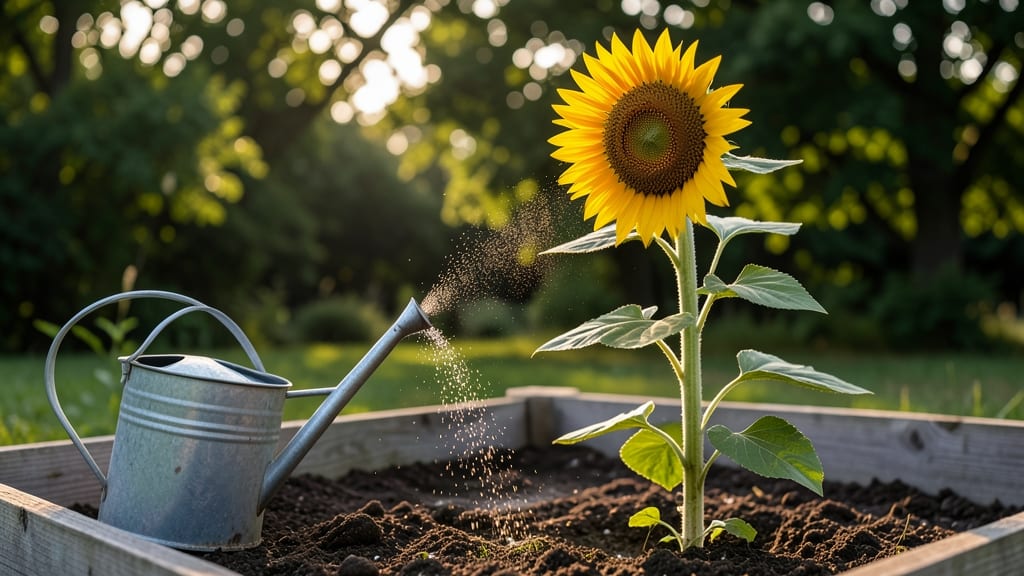
To keep your 🌻 sunflowers thriving, you need to water them just right—too much or too little can spell disaster for these towering beauties. These drought-resistant plants actually prefer deep, infrequent watering over shallow, frequent soaks, which helps their roots grow strong and reach deep into the soil.
New seedlings need consistent moisture, but once your sunflowers hit 3 feet tall, you can cut back slightly while still ensuring they get 1-2 inches of water weekly.
The key is understanding how your local climate and soil type affect their needs—sandy soil drains faster than clay, and summer heat demands more frequent watering than spring showers.
I’ll walk you through exactly how much to water sunflowers at every stage, from delicate sprouts to mature stalks, plus how to spot the signs of over- or underwatering.
By the end, you’ll have a foolproof system to keep your sunflowers happy and healthy, no matter what Mother Nature throws their way.
Whether you’re a first-time gardener or a seasoned green thumb, these tips will help you avoid common mistakes and grow sunflowers that reach their full, sun-soaked potential. Let’s get those roots drinking deep!
Sunflower watering schedule by growth stage: seedlings vs. mature plants
Sunflowers are drought-tolerant powerhouses once established, but their seedling stage is delicate. Understanding their watering needs by growth phase is key to avoiding stunted growth or root rot. Young plants need frequent, shallow moisture to establish roots, while mature sunflowers thrive with deep, infrequent watering.
Climate plays a huge role—sunflowers in hot, dry regions (like Arizona) need more frequent watering early on, while cooler climates (like Pacific Northwest) can stretch watering intervals. The goal? Keep soil consistently moist but never soggy, especially during vegetative growth and flowering stages.
Pro Tip: Use your finger to check soil moisture—1-2 inches deep should feel damp (not wet) for seedlings, while mature plants can handle drier soil between waterings. Overwatering is the #1 killer of sunflowers, so always prioritize drainage.
| Growth Stage | Watering Frequency | Water Amount | Soil Moisture Goal | Climate Adjustments |
|---|---|---|---|---|
| Seedlings (0-4 weeks) | Every 2-3 days | ½ inch per watering | Top 1-2 inches damp | Hot climates: daily misting |
| Vegetative (4-8 weeks) | Every 4-5 days | 1-1.5 inches per week | Top 3 inches moist | Drought: deep water every 3 days |
| Flowering (8-12 weeks) | Every 5-7 days | 1.5-2 inches per week | Top 4 inches slightly dry | Rainy seasons: reduce by 30% |
| Mature (Post-Flowering) | Every 10-14 days | 2 inches every 2 weeks | Deep soil moist | All climates: minimal water |
💧 Note: Adjust for container vs. in-ground (potted plants dry faster).
During the seedling stage (0-4 weeks), sunflowers need gentle but frequent watering to prevent their delicate roots from drying out.
I use a spray bottle for seedlings in hot climates to mimic morning dew, which keeps humidity high without over-saturating the soil. Mulch lightly with straw to retain moisture and protect young stems from temperature swings.
As sunflowers enter vegetative growth (4-8 weeks), their root systems expand rapidly, demanding deeper watering. Shift to drip irrigation or soaker hoses to deliver water directly to the root zone, avoiding wet foliage that invites powdery mildew.
Aim for 1-1.5 inches of water weekly, adjusting for rainfall—never let soil dry completely during this phase.
When flower buds form (8-12 weeks), sunflowers become more drought-resistant, but consistent moisture is critical for bloom size and seed development.
I water deeply every 5-7 days, often in the early morning to reduce evaporation. Yellowing leaves at this stage usually signal underwatering, while drooping petals may indicate overwatering or root rot.
Once sunflowers finish blooming, reduce watering to every 10-14 days to allow seeds to mature properly. Overwatering now can dilute seed flavor and attract pests. For drought-proofing, let soil dry slightly between waterings—sunflowers store water in their thick stems, making them surprisingly resilient once established.
For container-grown sunflowers, water 2-3 times weekly in summer since pots dry out 3x faster than in-ground soil. Use well-draining mixes with perlite or vermiculite to prevent root suffocation. In <
Signs of overwatering vs. underwatering sunflowers (with fixes)
Your sunflowers 🌻 might look tough, but they’re actually quite sensitive to watering mistakes. Overwatering and underwatering both cause stress, but the symptoms look different. Learning to spot these signs early can save your plants from decline or even death.
The key is observing the leaves, soil, and stem for subtle clues.
Overwatering often starts with yellowing leaves that feel mushy to the touch, while underwatering causes leaves to curl inward and turn crispy at the edges. Both conditions weaken your sunflowers, but the fixes couldn’t be more different. Let’s break down how to tell them apart and what to do next.
Overwatering Sunflowers: Pros & Cons
- Cooler soil temps in hot climates
- Reduces evaporation in sandy soil
- Root rot from soggy soil
- Fungal diseases (e.g., powdery mildew)
- Yellow, wilted leaves
- Stunted growth
Fixes for Overwatering
- Let soil dry 1-2 inches deep before watering
- Improve drainage with perlite or compost
- Water only at morning to reduce humidity
- Remove affected leaves to prevent spread
If your sunflowers are overwatered, the first step is to stop watering immediately and let the soil dry out. Use a soil moisture meter to check the top 2 inches—if it’s damp, wait another day. Amending the soil with organic matter like compost can also improve drainage over time.
Underwatered sunflowers show crispy leaf edges and a drooping stem that doesn’t bounce back when touched. The soil will pull away from the pot or feel bone-dry.
To fix this, water deeply until it runs out the drainage holes, then mulch around the base to retain moisture. Morning watering is best to prevent evaporation.
For both issues, mulching with straw or wood chips helps regulate soil moisture. It keeps roots cool in summer and prevents rapid drying in spring. If you’re unsure whether your sunflowers are thirsty or drowning, stick your finger 2 inches deep—if it’s dry, water; if it’s wet, wait.
Remember, sunflowers are drought-tolerant once established, but they still need 1-2 inches of water weekly. Adjust based on your climate—hotter days mean more frequent watering, while cooler weather lets you space it out. With these fixes, your sunflowers will bounce back stronger than ever.