
Flowers
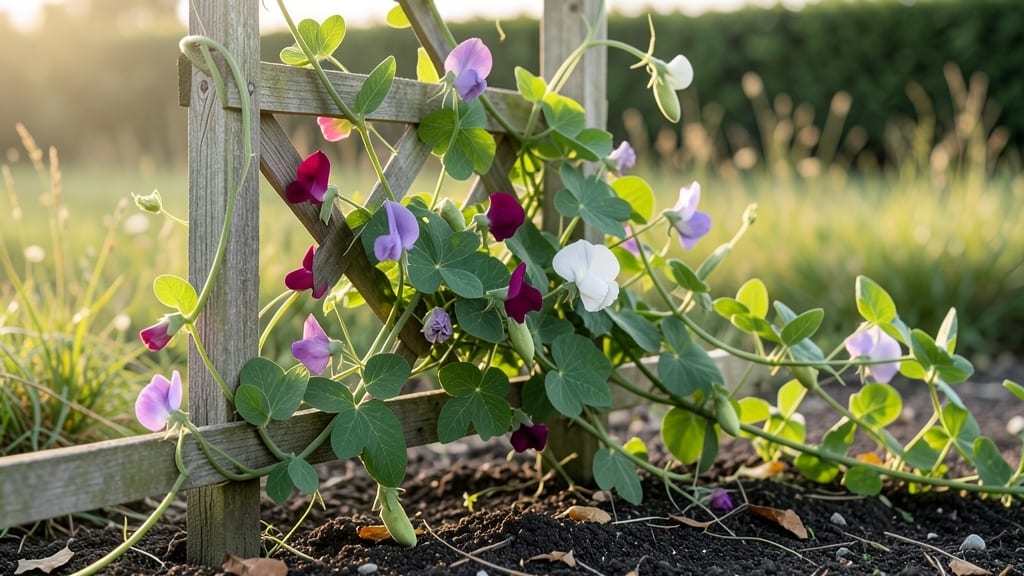
Sweet pea flowers grow tall in a stunning range from 2 feet to a towering 8 feet, turning your garden into a fragrant vertical display. But here's the catch: their height depends entirely on the variety you choose—whether you want compact blooms or dramatic vines reaching for the sky.
If you're dreaming of a romantic cottage garden, dwarf varieties like 'Cupani' stay cozy at just 1-3 feet, perfect for window boxes or small trellises. On the other hand, classic climbers like 'Blue Moon' or 'Spencer' can scale 6-8 feet, ideal for fences or sturdy arches.
The right support makes all the difference!
What most gardeners don’t realize is that proper training early on determines how tall your sweet peas will grow. Without a trellis or sturdy stake, even tall varieties can flop, leading to fewer blooms. I’ll show you exactly how to set up support systems that encourage healthy growth—no guesswork involved.
Ready to transform your space? Whether you're working with 6a zone conditions or planning a spring planting, knowing these height ranges will help you design a thriving climbing garden. Let’s get your sweet peas reaching their full potential!


Sweet pea flower height by variety: from compact to towering climbers
Sweet peas (Lathyrus odoratus) are one of the most fragrant and versatile flowers in any garden, but their mature height can vary dramatically depending on the variety.
Whether you're designing a small container garden or a towering vertical display, knowing the height range of each type helps you choose the perfect spot and support structure. Some varieties stay compact enough for window boxes, while others climb to 8 feet or more—ideal for fences or arches.
Height isn't just about aesthetics—it also affects how you train, prune, and even fertilize your sweet peas. For example, dwarf varieties need less frequent staking, while tall climbers require sturdy trellises to prevent flopping.
Let’s explore the most popular sweet pea types and their mature heights to help you plan your garden layout like a pro.
If you're working with limited space, 'Cupani' is my go-to dwarf variety—it thrives in window boxes or hanging baskets and only needs a small stake for support. Its 1–3 foot height makes it perfect for balconies or urban gardens where vertical space is at a premium.
The flowers are just as fragrant as their taller cousins but require far less maintenance.
For a mid-height option, varieties like 'Spencer' or 'Perfume Delight' strike the perfect balance. These 4–6 foot climbers are ideal for training along small fences, trellises, or obelisks. They add height without overwhelming a garden bed, and their prolific blooms create a stunning cascade of color.
I’ve used 'Spencer' in my garden to frame a south-facing patio, where its height catches the sunlight beautifully.
When you want to make a dramatic statement, reach for the tallest varieties like 'Blue Moon' or 'Matucana'. These 6–8 foot giants are perfect for arches, pergolas, or tall fences.
Their height creates a romantic, cottage-garden feel, and they’re excellent for drawing the eye upward in a garden design. Just be prepared to invest in a sturdy trellis—these varieties can get top-heavy with blooms!
Height also plays a role in pruning and care. Taller sweet peas benefit from regular deadheading to encourage continuous flowering, while dwarf varieties may need less frequent attention. Additionally, taller climbers often require additional support as they grow, so plan to install trellises or stakes early in the season.
I’ve learned the hard way that waiting until the vines are already sprawling makes for a messy and unstable situation.
Another factor to consider is spacing. Dwarf varieties can be planted 6–8 inches apart, while taller climbers need 12–18 inches of space to avoid overcrowding. Proper spacing ensures good airflow, which reduces the risk of fungal diseases like powdery mildew—a common issue in dense sweet pea plantings.
In my experience, well-spaced plants produce healthier vines and more abundant flowers.
Don’t forget that soil and sunlight can influence height slightly. While the varieties listed above are bred for specific heights, providing rich, well-draining soil and full sun (6+ hours daily) will help your sweet peas reach their full potential.
If you’re growing in partial shade, expect slightly shorter vines, though the flowers will still be just as fragrant. For maximum height, I always amend my soil with compost and a balanced fertilizer at planting time.
For gardeners with vertical space challenges, consider mixing heights in a single trellis. For example, you could plant 'Cupani' at the base and 'Blue Moon' at the top, creating a layered, cascading effect.
This technique works beautifully in small gardens or urban courtyards where space is limited but you still want a lush, fragrant display. Just be sure to provide support for each variety’s mature height to avoid tangling or flopping.
Finally, remember that sweet peas are annuals, so their height is a one-season investment. However, with proper care, you can enjoy their fragrant blooms from late spring to early fall. Whether you choose a compact dwarf, a mid-height climber, or a <
How to choose the right trellis for sweet pea heights (with support solutions)
Choosing the right trellis for your sweet peas depends entirely on their mature height and growth habits. Dwarf varieties like 'Cupani' only need lightweight supports, while tall climbers like 'Blue Moon' require sturdy, tall structures to reach their full 6-8 foot potential.
The wrong support can lead to flopping vines and fewer blooms—so let’s match your plants to the perfect trellis.
For compact varieties (1-3 feet), small obelisks or window box trellises work perfectly, keeping the fragrant blooms at eye level. Meanwhile, standard varieties (4-6 feet) thrive on fence trellises or A-frame supports.
The tallest varieties need arches or strong wire fences to handle their weight and encourage upward growth.
Here’s how to pair sweet pea heights with the best trellis options for a thriving climbing garden:
| Sweet Pea Height | Best Trellis Type | Support Material | DIY Hack |
|---|---|---|---|
| 1-3 feet (Dwarf) | Mini obelisk or window box trellis | Bamboo stakes or plastic mesh | Use a small wire cage for bushier growth |
| 3-5 feet (Semi-Dwarf) | Fence trellis or A-frame support | Wooden lattice or metal wire | Attach twine guides for gentle training |
| 6-8 feet (Standard/Tall) | Arches or strong wire fences | Metal arches or heavy-duty wood | Use sturdy stakes for extra stability |
If you’re growing multiple varieties, consider a mixed-height trellis system. For example, use a tall arch for 'Blue Moon' in the back and a small obelisk for 'Cupani' in the front. This creates a stunning layered effect while maximizing space.
For DIY solutions, repurpose materials like bamboo poles, old ladders, or even string between fence posts. Secure supports early—once vines reach 6 inches, they’ll need guidance to climb properly. Avoid overcrowding trellises, as this can lead to disease and poor airflow.
Pro tip: Train vines in a spiral pattern up obelisks or arches to encourage even growth. This not only looks beautiful but also prevents vines from breaking under their own weight during heavy blooming seasons.
With the right support, your sweet peas will flourish and fill your garden with fragrance all summer long! 🌸