
Flowers
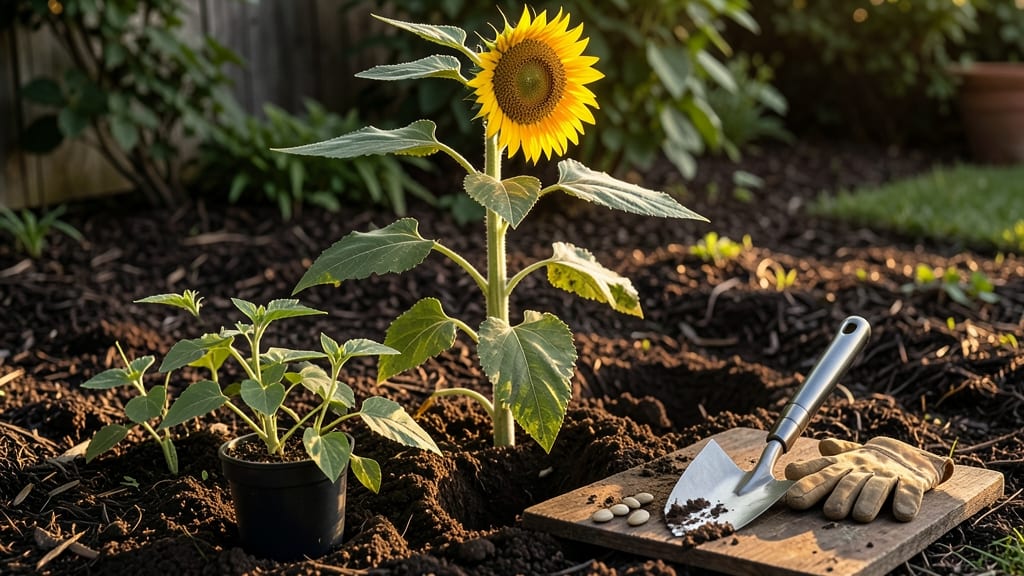
To plant sunflowers and watch them reach for the sky with those iconic 🌻 blooms, you need more than just sunshine—you need the right timing and technique. These cheerful giants thrive when planted at the perfect depth and spacing, ensuring strong stems and abundant flowers.
Whether you're growing them for their edible seeds or just to brighten your garden, getting the basics right makes all the difference.
Many gardeners assume sunflowers are low-maintenance, but skipping the proper planting steps can lead to weak stems or crowded plants. I’ve learned the hard way that ¼ to 1 inch deep and 12 to 24 inches apart is the sweet spot for most varieties.
This simple adjustment prevents competition for nutrients and keeps your sunflowers reaching their full potential—some even towering over 10 feet tall!
In this guide, I’ll walk you through the exact steps to prepare your soil, time your planting after the last frost (usually April to May in Zone 6), and water them just enough to encourage deep roots.
You’ll also discover how to avoid common mistakes, like overcrowding or under-watering, that can stunt your sunflowers’ growth.
By the end, you’ll have a sunflower patch that’s not just beautiful but also productive—whether you’re harvesting seeds for snacking or simply admiring the vibrant blooms. Let’s get those seeds in the ground the right way!

Optimal sunflower planting depth and spacing for maximum growth
Sunflowers thrive when planted with precision—not just in timing, but in depth and spacing. Too shallow, and roots struggle; too crowded, and stems weaken. The secret to those towering blooms you dream of lies in science-backed spacing rules.
Whether you're growing dwarf varieties for containers or giant sunflowers as statement plants, these guidelines will ensure your sunflowers reach their full potential.
For most sunflower varieties, the ideal planting depth is ¼ to 1 inch deep. This shallow placement allows young roots to emerge quickly without suffocating. Press the soil gently around the seed to maintain contact—this ensures consistent moisture until germination.
If you're sowing in cooler climates, you might plant slightly deeper (1 to 1.5 inches) to protect seeds from temperature fluctuations.
Spacing is where many gardeners go wrong. Single-stem varieties need 12 to 24 inches apart to prevent overcrowding, while cluster varieties (like 'Moulin Rouge') can handle 6 to 12 inches between plants. Crowding leads to weak stems, increased disease risk, and smaller blooms.
Think of it like giving each plant its own personal sunbeam—literally! Row spacing should be 2 to 3 feet apart to allow airflow and easy maintenance.
Dwarf sunflowers (1–3 feet tall) are perfect for containers or small gardens. Space these 6 to 10 inches apart and plant them ½ inch deep—their compact size means they need less elbow room. On the other hand, giant sunflowers (10–16 feet tall) require 24 inches between plants and 3 feet between rows. These towering beauties need space to avoid toppling over in wind or competing for nutrients.
🌻 Sunflower Planting Guide: Depth & Spacing
| Variety Type | Planting Depth | Spacing (Single Stem) | Spacing (Cluster) | Row Spacing |
|---|---|---|---|---|
| Dwarf (1–3 ft) | ½ inch | 6–10 inches | 4–8 inches | 1–2 feet |
| Semi-Dwarf (3–6 ft) | ¼–½ inch | 12–18 inches | 8–12 inches | 2 feet |
| Standard (6–10 ft) | ¼–1 inch | 18–24 inches | 12–18 inches | 2–3 feet |
| Giant (10–16 ft) | ½–1 inch | 24–36 inches | 18–24 inches | 3–4 feet |
💡 Pro Tip: Use a spacer tool or string grid to mark planting spots before sowing—especially for large varieties!
One of the biggest mistakes I see is planting sunflowers too close together in hopes of a "thicker" display. But this backfires—crowded plants compete for sunlight, water, and nutrients, leading to leggy stems and fewer blooms.
Imagine a 12-foot sunflower leaning against its neighbor like drunken friends at a party—it’s a disaster waiting to happen! Proper spacing ensures each plant has room to photosynthesize efficiently and develop strong stems.
If you're planting in containers, choose dwarf or semi-dwarf varieties and use at least a 5-gallon pot per plant. Space them 8 to 12 inches apart and plant ½ inch deep.
Containers dry out faster, so monitor soil moisture closely. For edible sunflower varieties (like 'Autumn Beauty'), follow the same spacing rules—you’ll want those seeds to develop fully without competition.
For cut flower production, prioritize single-stem varieties spaced 24 inches apart. This ensures straight stems and minimal damage during harvest. If you're growing sunflowers as a windbreak or living fence, plant them in staggered rows with 3 feet between rows.
Their dense foliage will block wind while still allowing sunlight to reach other plants below.
Don’t forget to rotate crops if you plant sunflowers yearly. They’re heavy feeders, and replanting in the same spot depletes nutrients like phosphorus and potassium. After harvesting, amend the soil with compost or well-rotted manure to replenish nutrients for next season’s sunflowers.
Finally, thin seedlings early to maintain proper spacing. Once the first true leaves appear, gently remove weaker seedlings, leaving only the strongest plant in each spot.
This might feel cruel, but it’s a necessary step for robust growth. Think of it as giving your sunflowers a competitive edge from day one!
Step-by-step sunflower planting guide: from soil to sprout
Sunflowers thrive when you start with the right foundation—well-prepared soil and the perfect timing. I’ve learned that skipping these steps often leads to weak stems or disease-prone seedlings.
The key is loamy, well-draining soil with a pH of 6.0–7.5, which you can test with a simple soil kit from your local garden center. If your soil is too dense, mix in compost or aged manure to improve drainage and fertility.
Timing is everything for sunflowers. Plant your seeds after your last frost date (typically mid-spring in most regions) when soil temperatures reach at least 50°F (10°C). Cold soil slows germination, so wait for warmth to ensure those cheerful faces pop up faster.
Pro tip: If you’re in doubt, use a soil thermometer—it’s a game-changer for impatient gardeners like me!
How to Plant Sunflowers: A Simple Checklist
-
Step 1: Prepare the soil
- Loosen soil to 12 inches deep with a garden fork
- Mix in 2–3 inches of compost for nutrients
- Test pH—amend with lime (pH >7.5) or sulfur (pH <6.0)
-
Step 2: Plant seeds at the right depth
- Drop seeds ½–1 inch deep (no deeper or they won’t sprout!)
- Space seeds 6 inches apart for clusters or 12–24 inches for single stems
- Plant in rows 2–3 feet apart to prevent overcrowding
-
Step 3: Water gently but deeply
- Water 1 inch per week (deep soak, not daily sprinkles)
- Keep soil consistently moist until seedlings emerge (about 7–14 days)
- Avoid wetting leaves to prevent damping-off disease
-
Step 4: Thin seedlings for strength
- Once seedlings are 3–4 inches tall, thin to 12–24 inches apart
- Snip weak stems at the base with scissors—don’t pull to avoid disturbing roots
- Use thinned seedlings in salads or share with neighbors!
-
Step 5: Add mulch and monitor
- Apply 2–3 inches of mulch (straw or grass clippings) to retain moisture
- Watch for pests like beetles—spray with soapy water if needed
- Stake tall varieties (over 6 feet) with bamboo stakes early
After planting, resist the urge to overwater—sunflowers are surprisingly drought-tolerant once established. I’ve seen them thrive with deep watering every 3–5 days in hot climates. The secret is watering deeply in the morning to let foliage dry quickly, reducing the risk of fungal diseases like powdery mildew.
If you notice yellowing leaves, it’s often a sign of overwatering or poor drainage.
One of my biggest mistakes early on was planting sunflowers too close together. Crowded plants compete for nutrients, leading to weak stems that snap in wind or rain. Now, I always follow the 12–24 inch spacing rule for single-stem varieties like ‘Mammoth’ or ‘Russian Giant.’
For dwarf varieties (like ‘Teddy Bear’), you can space them closer—6–12 inches apart—but give them plenty of sunlight to prevent leggy growth.
With these steps, your sunflowers will sprout in 7–14 days and reward you with bold, cheerful blooms by late summer. The first time I saw a sunflower shoot crack through the soil, I knew I’d hooked on gardening forever.
Now it’s your turn—grab those seeds and let the sunshine do the rest! 🌻