
Planting
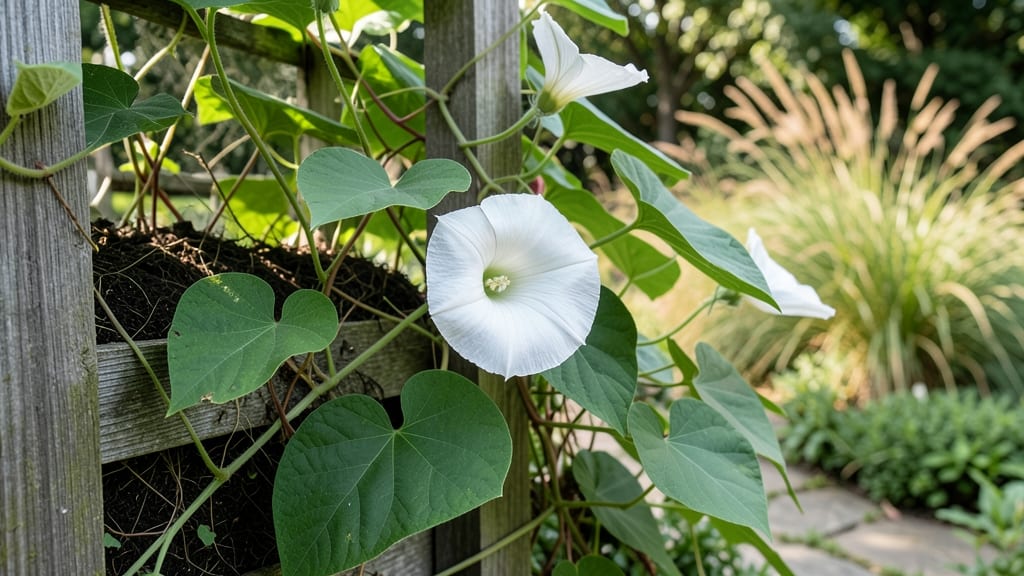
If you’ve ever wondered what a moonflower plant looks like, picture this: a lush, fast-growing vine with heart-shaped leaves that unfurls giant white trumpet blooms—only after the sun sets.
Unlike daytime flowers, the moonflower 🌙 stays hidden until nightfall, revealing its 10-inch-wide petals and intoxicating vanilla scent when the moon takes center stage.
This night-blooming beauty thrives in USDA Zone 6a and beyond, climbing trellises or fences with aggressive speed—sometimes reaching 10 feet in a single season. Its leaves are glossy and deep green, but the real showstopper?
The way its buds transform from silvery-green in the morning to fully unfurled white blossoms by dusk, only to wilt by dawn.
What makes the moonflower stand out isn’t just its size or scent—it’s the timing. While most flowers bask in daylight, this plant’s entire life cycle revolves around darkness, making it a rare and magical addition to any garden.
Ready to spot one? Here’s exactly what to look for when the night falls.
From its rapid vine growth to its fleeting nocturnal blooms, the moonflower is a gardener’s secret weapon for turning evenings into enchanting displays. Let’s break down its distinctive features so you’ll never confuse it with other plants again.

Distinctive moonflower plant features: how to identify its unique appearance
If you've ever wondered what does a moonflower plant look like, the answer lies in its dramatic nighttime transformation. During the day, moonflowers (Ipomoea alba) appear as unassuming vines with heart-shaped leaves and slender stems, but as dusk falls, they reveal their true magic.
Their 10-inch white trumpet-shaped flowers unfurl, emitting a sweet vanilla-like fragrance that perfumes the evening air—making them one of nature's most enchanting nocturnal bloomers.
The moonflower's ephemeral blooming cycle is one of its most distinctive traits. Flowers open fully at dusk, reaching peak beauty around midnight, before wilting by morning. This fleeting display ensures they're pollinated by night-flying moths, their primary pollinators.
Unlike many garden plants, moonflowers don't just look different at night—they're biologically designed to function under moonlight, a feature that sets them apart from day-blooming varieties.
🌙 Key Visual Identification Tip: Look for silvery-white buds forming during the day—these are your first clue that a moonflower is nearby. The buds' metallic sheen is a dead giveaway, distinguishing them from other vines like morning glories, which typically have green or purple buds.
| Feature | Description | Distinguishing Trait |
|---|---|---|
| Flowers | Giant 10-inch white trumpets | Open only at night (dusk to midnight) |
| Leaves | Heart-shaped, glossy, 3-6 inches long | Prominent veins and twisting growth |
| Vines | Twining, grows 10+ feet per season | Climbs aggressively on trellises or fences |
| Bud Color | Silvery-white (not green) | Unique metallic sheen before blooming |
| Scent | Vanilla-like fragrance | Peaks at midnight, fades by morning |
The moonflower's heart-shaped leaves are another key identifier. They're typically 3-6 inches long with pointed tips and prominent veins that create a delicate lace-like pattern.
Unlike morning glories, which often have rougher leaf edges, moonflower leaves are smooth and slightly glossy, reflecting light in a way that's almost luminous under moonlight.
One of the most misunderstood aspects of moonflowers is their twining vine habit. These plants don't cling like ivy—they coil clockwise around supports, using their stems to anchor themselves.
This growth pattern is crucial for their identification, as it helps distinguish them from other vines like evening primrose, which doesn't climb but instead spreads along the ground.
To compare moonflowers with similar night-blooming plants, consider the evening primrose (Oenothera biennis). While both bloom at night, primroses have yellow flowers with four petals and a more upright growth habit.
Moonflowers, on the other hand, feature single, trumpet-shaped blooms that can reach nearly a foot in width, creating a dramatic focal point in any garden.
If you're trying to identify a moonflower in your garden, pay close attention to the flower's ephemeral nature. Unlike day-blooming flowers that stay open for hours, moonflowers wilt by mid-morning, leaving behind drooping petals and empty seed pods.
This rapid cycle is a clear indicator that you're dealing with a true moonflower rather than a daytime bloomer.
Another tell-tale sign is the plant's rapid growth rate. Moonflowers can grow 6-10 feet in a single season, often outpacing other vines in your garden. Their aggressive climbing habit means they'll quickly cover trellises, fences, or even nearby shrubs, creating a lush, romantic backdrop perfect for evening strolls.
For best identification results, observe the plant over multiple evenings. Note the time the flowers open (typically just after sunset) and how long they remain open.
Moonflowers often peak between 10 PM and midnight, making them ideal for gardeners who enjoy late-night gardening or want to attract nocturnal pollinators like moths.
🌱 Pro Tip: If you're unsure whether you have a moonflower, check for seed pods in the morning. Moonflower seed pods are woody and elongated, often containing 1-3 large seeds each. This is another way to distinguish them from morning glories, which produce smaller, flatter seed pods.
Moonflower growth habits: how its vines and leaves differ from day-blooming plants
The moonflower (Ipomoea alba) grows with unmatched speed, often reaching 10+ feet in a single season if given proper support. Its vines are aggressive climbers, twining clockwise around trellises or fences with impressive strength.
Unlike day-blooming vines like morning glories, moonflower vines don’t need constant pruning—they focus their energy on rapid vertical growth to reach sunlight indirectly through moonlight exposure.
What truly sets moonflower apart are its heart-shaped leaves, which measure 3-6 inches wide with prominent veins that create a textured, glossy surface. These leaves are deep green during the day but develop a slight bluish tint at night due to chlorophyll adjustments triggered by low light conditions.
This nocturnal adaptation helps the plant maximize photosynthesis when it matters most—after sunset.
🌱
One of the most fascinating aspects of moonflower growth is how its leaves respond to moonlight. Under artificial or natural moonlight, the foliage exhibits a chlorophyll fluorescence effect, making the veins appear slightly silvery-blue.
This adaptation helps the plant absorb low-light energy efficiently, a trait absent in day-blooming plants like morning glories or honeysuckle.
If you’re trying to distinguish moonflower from its daytime cousin, the morning glory (Ipomoea purpurea), pay attention to these key differences: moonflowers have larger flowers (8-10 inches vs. 3-5 inches) and twine clockwise around supports, while morning glories twine counter-clockwise.
Additionally, moonflower buds are silvery-white by evening, whereas morning glory buds remain green until they open in the morning.
🌿
To encourage healthy vine growth, provide a trellis or sturdy fence—moonflowers can double their height with proper support. Prune only to direct growth; aggressive pruning can stunt its rapid climbing habit.
For maximum nocturnal blooms, ensure the plant receives full sun during the day (6+ hours) to build energy for its nighttime display.