
Flowers
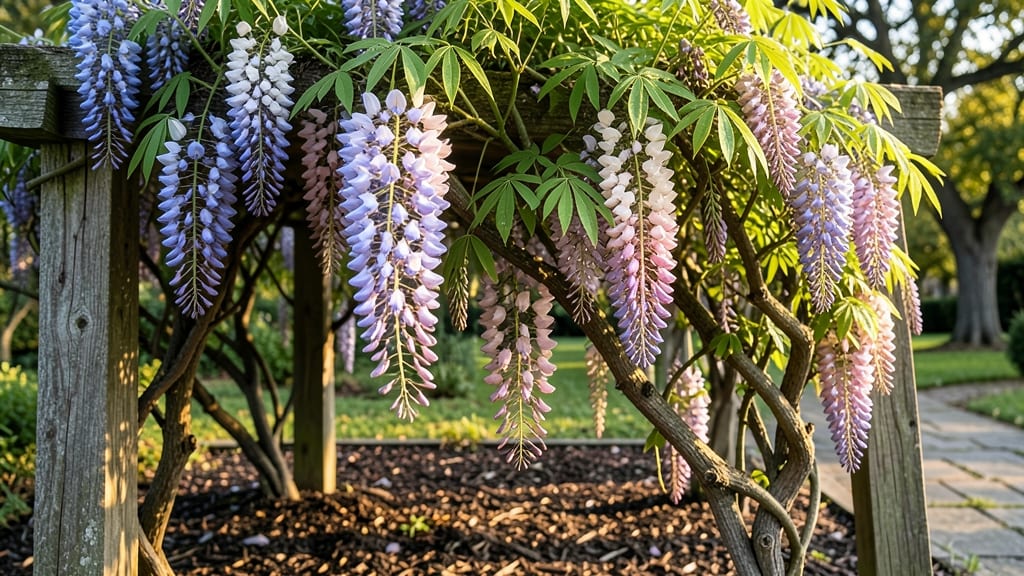
If you’ve ever dreamed of waking up to a garden draped in cascading 🌸 wisteria blooms, the answer to when does wisteria flower is the first step to turning that dream into reality—because those fragrant purple, white, or blue clusters don’t stick around forever.
The answer to when does wisteria flower isn’t just a season; it’s a 3- to 6-week window that varies wildly depending on your variety and climate zone.
Most gardeners in USDA Zone 6a (like me!) can expect their wisteria to burst into color between late April and early June, but here’s the catch: Chinese wisteria often blooms earlier, while Japanese varieties might linger into June.
That’s why knowing your specific type—and adjusting care—can mean the difference between a showstopper and a bust.
What if your wisteria isn’t cooperating? The key might be as simple as pruning at the right time (late winter) or feeding it just before buds form.
I’ll walk you through the exact steps to predict—and even control— your wisteria’s blooming schedule, so you’re never left wondering where those flowers went.
Ready to turn your vine into a reliable bloomer? Let’s dive into the science behind those spectacular spring displays and how to make them happen year after year—no guesswork required.
Wisteria flowering timeline by variety: months and climate zones
Timing your wisteria blooms is like planning a garden party—you want to be ready when those fragrant purple cascades arrive! The exact flowering window depends on your wisteria’s variety and USDA zone, with some blooming as early as late winter and others waiting until late spring.
Understanding these differences helps you prune at the right time and enjoy peak fragrance.
Wisteria flowers appear on old wood, meaning last year’s growth produces this year’s blooms. This makes late winter pruning critical—cut too late, and you risk removing next year’s flowers.
Below, I’ve broken down the flowering timelines for the most popular varieties, adjusted for USDA zones 5-9, so you can plan your garden’s biggest floral show.
If you’re in USDA zone 5 or 6, expect blooms to arrive 2-3 weeks later than the table suggests, as cooler temperatures delay growth. For example, Chinese wisteria in zone 5 might not flower until early June instead of late April.
Conversely, zone 8-9 gardeners can enjoy earlier blooms, sometimes as early as March for hardy varieties like American wisteria.
Microclimates also play a role—wisteria near south-facing walls or in urban heat islands may bloom 1-2 weeks earlier than those in open fields.
Pay attention to last frost dates in your area: wisteria needs consistent warmth to trigger bud opening, so late frosts can push blooms into June or even July.
For container-grown wisteria, flowering may be delayed by 1-2 weeks due to root restriction and drying soil. If your potted wisteria isn’t blooming on schedule, check for adequate sunlight (it needs 6+ hours daily) and deep watering to encourage robust growth.
Containers also dry out faster, so mulch around the base to retain moisture.
Pruning timing is just as critical as knowing when flowers appear. Always prune right after blooming (late June for most varieties) to shape the vine and encourage next year’s flowers.
Avoid heavy pruning in fall or winter, as this removes next season’s flower buds. For Japanese wisteria, which blooms later, delay pruning until July or August.
Pro tip: Mark your calendar when you see buds forming in late winter—this is your first clue about bloom timing. If buds swell but then drop off, your wisteria may need more sunlight or balanced fertilizer (like 10-10-10 NPK) applied in early spring
Healthy buds mean abundant flowers are on the way! 🌸
How to predict your wisteria’s blooming schedule year after year
Predicting when your wisteria will flower isn’t just guesswork—it’s a mix of science and observation. By tracking growth stages, adjusting for your local microclimate, and using last year’s blooms as a guide, you can forecast with surprising accuracy.
I’ve learned that even small adjustments—like sunlight exposure or pruning timing—can shift blooms by weeks, so let’s break down the secrets to nailing your wisteria’s schedule.
Start by marking your calendar when buds first appear in late winter or early spring. This is your first clue to the blooming window, which typically arrives 4–6 weeks later. For example, if buds show up in March, expect flowers by mid-April to early May.
But here’s the catch: your wisteria’s variety and local climate zone play huge roles in timing—so don’t assume one size fits all!
- 1 Track bud formation: Note the exact date buds swell in late winter—this predicts bloom time 4–6 weeks later.
- 2 Adjust for sunlight: Full sun (6+ hours) advances blooms by 1–2 weeks; partial shade delays them.
- 3 Use last year’s data: If blooms arrived in May last year, expect a similar window—unless you pruned differently.
- 4 Prune strategically: Heavy pruning in late winter encourages earlier blooms; light pruning delays them.
- 5 Monitor soil moisture: Drought stress in spring can delay blooms; consistent watering keeps timing on track.
Your wisteria’s variety also dictates timing. For instance, Chinese wisteria (Wisteria sinensis) often blooms 1–2 weeks earlier than Japanese wisteria (Wisteria floribunda).
If you’re in a warmer climate zone (USDA 8–10), blooms may arrive as early as March, while cooler zones (USDA 5–7) might see flowers in May or June.
I once had a Japanese wisteria bloom in late April in Zone 7—until I moved it to a sunnier spot, which shifted blooms to mid-April the next year!
Don’t overlook microclimates—your wisteria’s exact location matters. A vine on a south-facing wall will bloom weeks ahead of one in a shady corner. Even a 5-foot difference in elevation can create a 2-week shift in timing.
To test this, mark the earliest bud on each vine in your garden—you’ll spot patterns quickly.
Finally, pruning is the wildcard. Prune too aggressively in late winter, and you’ll delay blooms by removing next year’s flower buds (which form on old wood). Instead, prune lightly in summer to shape growth without sacrificing flowers.
I prune my wisteria in July to control its size while ensuring abundant blooms the following spring.
With these tips, you’ll predict your wisteria’s blooming schedule like a pro—no more missed photo ops or last-minute scrambling for the perfect viewing spot! 🌸