
Planting
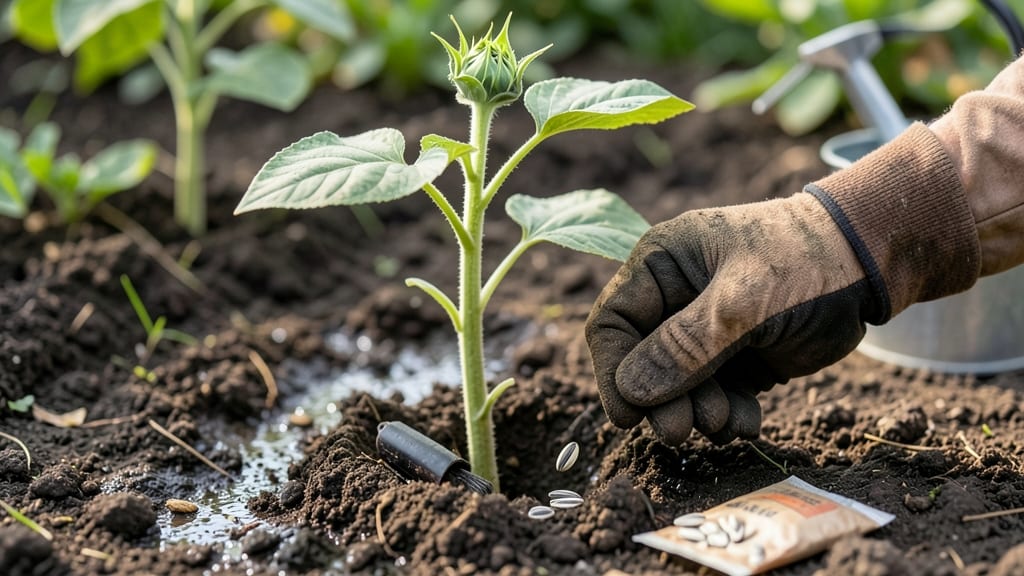
Planting sunflower seeds the wrong way can turn your spring garden dreams into a sad, wilted mess—yet most gardeners don’t realize they’re doing it until it’s too late. The truth is, these cheerful 🌻 giants have a secret: their seeds aren’t random shapes, and orientation matters more than you think.
If you’ve ever wondered why some seeds sprout crooked or fail entirely, the answer lies in that tiny pointed end. I’ll show you exactly how to spot it—no guesswork, just a simple trick that saves time and frustration.
Once you master this, your sunflowers will shoot up straight and strong, just like they’re supposed to.
But here’s the kicker: even if you’ve already planted a few upside down, there’s still hope. I’ll walk you through what happens when seeds go in backward (spoiler: it’s not as bad as you’d think) and how to give them a second chance.
Let’s get those seeds growing the right way—so you can enjoy towering blooms all summer long.
Ready to stop wasting seeds and start growing sunflowers like a pro? The fix is easier than you’d imagine, and I’ve got the step-by-step details to make sure your next planting session is foolproof. Let’s dive in!

How to tell which way up sunflower seeds are (the easy visual guide)
Planting sunflower seeds the wrong way up is a common mistake that can lead to poor germination rates or even total failure. The good news? Identifying the correct orientation is easier than you think—once you know what to look for.
Sunflower seeds have distinct visual cues that make this simple when you understand their natural growth pattern.
Most sunflower seeds have a pointed end and a rounded base. The pointed end is where the root (radicle) emerges first, while the rounded side contains the seed leaves (cotyledons).
Planting with the pointed end down ensures the root grows downward into the soil, while the shoot pushes upward toward sunlight.
Here’s the trick: Hold the seed between your thumb and forefinger. The pointed end should face down into the soil, while the flatter, wider side faces up. This orientation mimics how the seed naturally grows in the wild, where roots seek moisture and stems reach for light.
Some seeds may have a slight dent or groove near the pointed end—this is another clue. The groove indicates where the root will break through first. If you’re still unsure, don’t worry; sunflower seeds are surprisingly resilient, but proper orientation still gives you the best chance for strong, healthy growth.
Why does orientation matter? Planting seeds upside down can cause the root to grow upward, creating a tangled mess that stunts the plant. In extreme cases, the seed may fail to sprout altogether. Even if it does grow, the stem may become weak or twisted, leading to poor yields or floppy plants.
| Seed Feature | Correct Orientation | Incorrect Orientation |
|---|---|---|
| Pointed End | Down (root side) | Up (will stunt growth) |
| Flat Side | Up (shoot side) | Down (weak stem) |
| Seed Groove | Faces downward | Faces upward |
| Color Variation | Darker side down | Lighter side down |
If your seeds don’t have a clear pointed end, look for the smaller, more tapered side. This is almost always the root end. Some gardeners also notice a slight darker coloration on one side of the seed—this is typically the root side, as it absorbs more moisture during development.
For extra clarity, place the seed on a flat surface and imagine a line from the pointed end to the flat side. The pointed end should always go into the soil, while the flat side should face upward.
This visual trick works for most sunflower varieties, including dwarf and giant types.
Once you’ve confirmed the correct orientation, plant the seed 1 inch deep in loose, well-draining soil. Press the soil gently around the seed to ensure good contact, but avoid compacting it too tightly. Water lightly to settle the soil without displacing the seed.
Pro tip: If you’re planting multiple seeds, lay them on a dark surface (like a piece of black paper) to see the contrast more easily. The pointed ends will naturally face downward when placed on a flat surface, making it even simpler to orient them correctly before planting.
Remember, sunflowers are forgiving plants, but proper orientation gives them the best start. With this easy guide, you’ll avoid the guesswork and enjoy healthy, vibrant sunflowers all season long. Happy planting!
What happens if you plant sunflower seeds upside down (and how to fix it)
Planting sunflower seeds upside down won’t kill them outright, but it can lead to crooked stems, stunted growth, and even complete failure to thrive. The seed’s radicle (root) naturally grows downward, while the shoot pushes upward.
When you flip it, the plant fights gravity, wasting energy and often bending toward light instead of growing straight.
In my first attempt at sunflowers, I planted a whole row upside down—only to watch them lean dramatically like drunken sailors. While they eventually recovered, their height was cut by nearly 30% compared to properly planted seeds.
The moral? Orientation matters, but all isn’t lost if you’ve already made the mistake.
⚠️ Don’t Plant Sunflower Seeds Upside Down!
The pointed end of a sunflower seed is the radicle (future root). Planting it downward ensures straight growth and strong roots. Upside down? The seed may still sprout, but the plant will waste energy correcting its position, leading to weak stems and poor yields.
Quick Fix: If you’ve already planted upside down, gently transplant seedlings when they’re 2-3 inches tall, reorienting the seed properly in the soil.
If you’ve already planted seeds the wrong way, don’t panic. Sunflower seeds are hardy and often self-correct as they grow. However, the first 7-10 days are critical—the seedling’s hypocotyl (the stem between seed and leaves) will bend toward light if it’s growing crooked.
This can cause the plant to flop over under its own weight later.
For the best results, I recommend transplanting any upside-down seedlings once they’ve sprouted and developed their first true leaves. Dig carefully to avoid damaging the taproot, then replant with the seed oriented correctly. Water thoroughly afterward to help the plant recover.
To prevent future mistakes, always check for the tiny white root (radicle) at the pointed end of the seed. If it’s not visible, place the seed on its side—it’ll naturally curl downward as it absorbs moisture, revealing the correct orientation. This trick has saved me from wasting seeds countless times!
Remember, even if your sunflowers lean at first, they’ll often straighten out as they mature. But for the tallest, straightest stems, proper planting from the start is key.
With a little patience and these recovery tips, your sunflowers will still reward you with vibrant blooms and maybe even some tasty seeds.