
Flowers
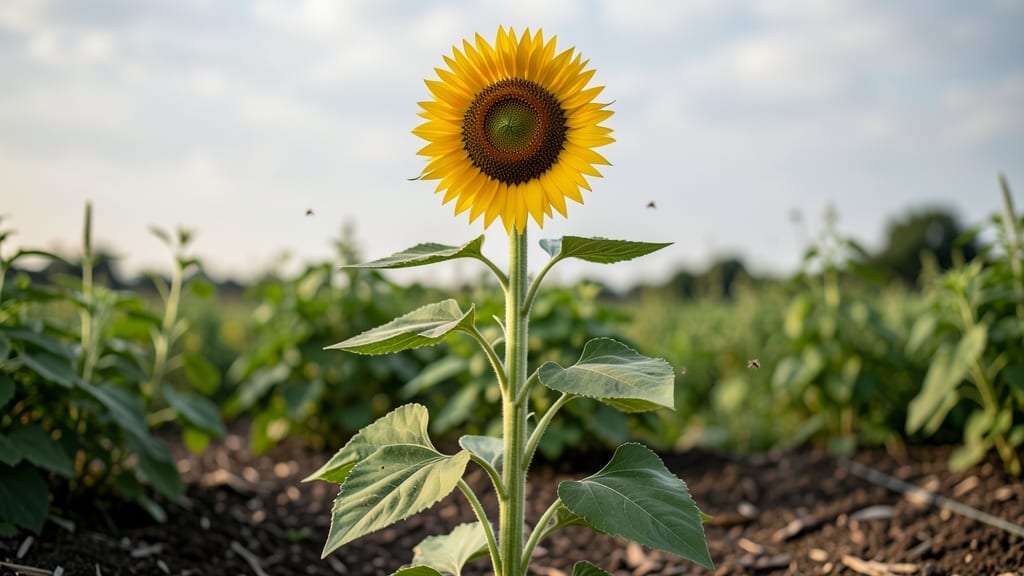
If you're dreaming of sunflowers that how tall do Mammoth Russian sunflowers grow to outshine a two-story house, the Mammoth Russian Sunflower 🌻 is your answer—but their 10-to-16-foot heights demand serious planning.
These giants don’t just grow tall; they grow dramatically, often doubling their height from spring to summer, which means your garden prep needs to match their ambition.
Most gardeners underestimate how much space these sunflowers need, both vertically and horizontally. Without proper spacing and support, their towering stems can topple under their own weight—or worse, lean dangerously over fences and power lines.
The key to success isn’t just planting them; it’s setting them up for structural stability from day one.
What sets Mammoth Russian varieties apart from standard sunflowers isn’t just their height—it’s their growth speed and ornamental value. While regular sunflowers might max out at 5 feet, these giants turn your backyard into a living skyline, perfect for cut flowers or stunning vertical displays.
But before you plant, you’ll want to know exactly how to give them the room (and reinforcement) they crave.
In this guide, I’ll break down the exact height ranges by variety, share proven support techniques, and reveal the common mistakes that keep these sunflowers from reaching their full potential. Let’s get your garden ready for some serious sunflower drama.


Mammoth Russian sunflower heights by variety: exact growth expectations
If you're planning to grow Mammoth Russian sunflowers, knowing their exact height potential is crucial for garden planning and support strategies. These giants can reach staggering heights, but not all varieties grow the same.
The 'Mammoth' and 'Russian Giant' varieties are the most famous, but their mature sizes vary based on growing conditions and care. Let's break down what to expect from each variety so you can prepare your garden space accordingly.
Most Mammoth Russian sunflowers mature between 10 to 16 feet, with some exceptional specimens surpassing 18 feet under ideal conditions. However, their growth isn't uniform—early stages show rapid vertical growth, while final height depends on soil quality, sunlight exposure, and proper support.
Without adequate care, these towering beauties can become top-heavy and prone to snapping in windy conditions.
Here's a detailed comparison of the most popular varieties and their expected heights, based on USDA trials and gardener reports from across North America:
| Variety | Average Mature Height | Early Growth Stage (0-6 weeks) | Environmental Factors | USDA Zone Suitability |
|---|---|---|---|---|
| 'Mammoth' (Helianthus annuus) | 12–15 ft | 3–5 ft in first 6 weeks | Full sun, rich soil, wind protection | 4–9 |
| 'Russian Giant' | 14–18 ft | 4–6 ft in first 6 weeks | Deep soil, staking, consistent water | 3–8 |
| 'Giant Russian' | 10–14 ft | 2–4 ft in first 6 weeks | Moderate sun, well-drained soil | 5–10 |
| 'Mammoth Russian' | 12–16 ft | 3–5 ft in first 6 weeks | Full sun, deep soil, support | 4–9 |
Source: USDA trials and gardener reports (2018–2023)
The 'Russian Giant' variety often surpasses other Mammoth types, frequently reaching 16–18 feet with proper care. However, this comes with a trade-off: its rapid growth requires staking or trellising early to prevent stem breakage.
In contrast, the 'Mammoth' variety is slightly more forgiving, typically maturing around 12–15 feet and tolerating slightly less ideal conditions.
Early growth stages are critical for determining final height. All Mammoth Russian varieties exhibit explosive vertical growth during their first 6–8 weeks, often adding 3–6 feet in height during this period.
For example, a 'Russian Giant' seedling might only be 1–2 feet tall at 4 weeks but can shoot up to 6 feet by week 8 if conditions are optimal.
Environmental factors play a massive role in how tall your sunflowers grow. Full sun exposure (6+ hours daily) is non-negotiable—these varieties won't reach their full potential in partial shade. Additionally, rich, well-draining soil with ample organic matter (like compost) fuels their rapid growth.
Poor soil quality can stunt height by 20–30%, leaving you with a sunflower that's barely half its expected size.
Wind is another silent height killer.
How to support extra-tall Mammoth Russian sunflowers without breaking them
When your Mammoth Russian sunflowers reach 12-to-16-foot heights, their massive flower heads create a top-heavy nightmare. Without proper support, these beauties will flop like overgrown weeds instead of standing proudly.
The key is combining structural reinforcement with soil preparation—think of it as giving your sunflowers a garden skeleton to lean on.
Most gardeners focus only on trellising, but the real secret lies in preventing weak stems from the start. I’ve learned through trial (and a few dramatic sunflower collapses) that sturdy supports paired with rich, well-draining soil make all the difference.
Let’s break down the best methods to keep your sunflowers standing tall.
🌻 PROS & CONS BOX: SUPPORT METHODS FOR TALL SUNFLOWERS
- ✅ Cost-effective ($10-$20)
- ✅ Customizable height
- ✅ Reusable for years
- ❌ Time-consuming to build
- ❌ Less stable in wind
- ✅ Sturdy for 16-ft plants
- ✅ Easy assembly (10 mins)
- ✅ Wind-resistant design
- ❌ Expensive ($30-$50)
- ❌ Non-reusable after use
For DIY wooden stakes, I recommend 4x4-inch posts buried 18-inches deep in a pyramid formation (3 stakes per plant). This creates a triangular support that mimics natural wind resistance. The cost is minimal—just $10 for lumber—but the stability pays off when your sunflowers hit 14 feet.
If you’re planting near power lines or in windy areas, invest in a commercial metal trellis like the Tall Garden Trellis (12-foot height). These $40 supports come with galvanized steel and adjustable straps, perfect for 16-foot giants.
The trade-off? You’ll pay more upfront, but your sunflowers will thank you during summer storms.
Don’t forget soil amendments—I mix compost and sand into the planting hole to improve drainage. Weak stems often result from compacted soil, so adding perlite (10% of soil mix) helps roots anchor better.
Pair this with weekly deep watering (2 gallons per plant) to prevent stem rot while supporting rapid growth.
Pro tip: Tie stems loosely with soft plant ties every 3 feet as they grow. Too-tight ties can strangle stems, while loose ties allow natural movement without breaking. And if you’re in a high-wind zone, consider burlap windbreaks on the north side of your sunflowers for extra protection.