
How To
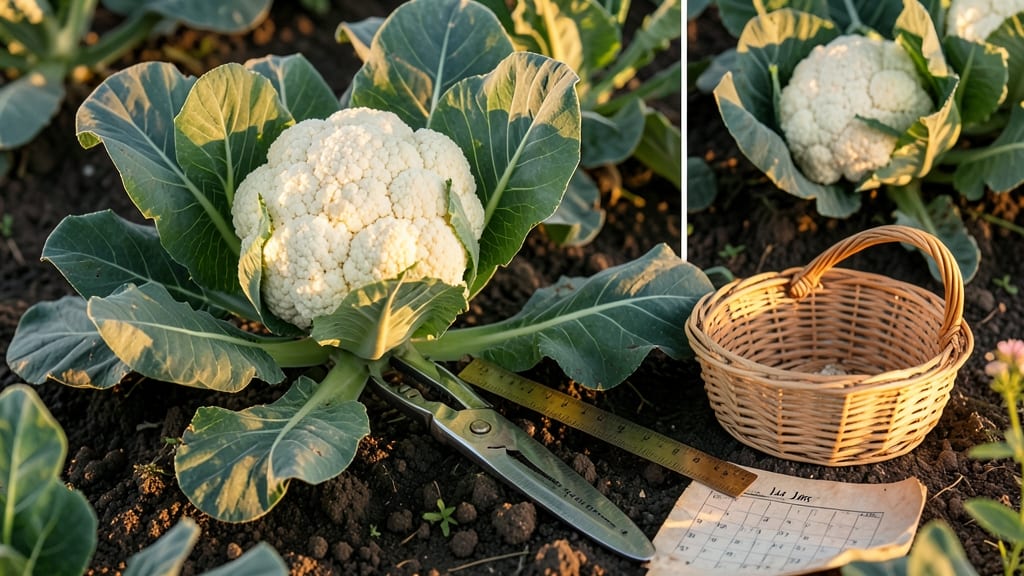
Knowing when to harvest your 🥬 cauliflower can mean the difference between a tender, flavorful head and one that's tough or bitter. The right timing isn't just about days after planting—it's about checking the curd's size, color, and firmness to catch it at peak perfection.
If you've ever pulled a cauliflower from your garden only to find it too small or already overripe, you know how frustrating it can be.
The key is learning to read your plants' visual cues—like when the head reaches 6-8 inches and the outer leaves stay vibrant green—so you can harvest at the exact moment for the best results.
In this guide, I'll walk you through the easiest way to spot a perfectly ripe cauliflower, including how temperature and variety affect timing. Whether you're a seasoned gardener or just starting, these tips will help you avoid common mistakes and enjoy homegrown cauliflower at its best.
By the end, you'll confidently know when to pick your cauliflower—so you can enjoy that satisfying crunch and creamy texture every time. Let's dive into the simple checklist that makes harvesting a breeze!


Cauliflower curd color and size: the ultimate harvest checklist
Knowing when to harvest cauliflower isn’t just about waiting for a certain day—it’s about reading your plant’s visual cues. The curd color and head size change dramatically as your cauliflower matures, and missing these signs means sacrificing flavor and texture.
Whether you’re growing white, green, or purple varieties, these key indicators will help you pick at the perfect moment.
First, focus on the head size. Ideal harvest occurs when your cauliflower reaches 6-8 inches in diameter. This ensures the curds are tight and flavorful, not woody or bitter.
Smaller heads may not be fully developed, while larger ones often become tough. Check the outer leaves too—they should still be vibrant green, not yellowing or browning.
Now, let’s talk curd color. White cauliflower should have a bright, creamy interior with no yellowing. Green varieties like Romanesco or Purple cauliflower will have their signature hues, but the curds must still be firm and compact.
A quick twist test—gently twisting the stem—can reveal readiness if it snaps cleanly.
Here’s a visual checklist to simplify your harvest decisions, covering all cauliflower types and their unique traits.
| Cauliflower Type | Ideal Head Size | Curd Color | Leaf Condition | Harvest Tip |
|---|---|---|---|---|
| White | 6-8 inches | Bright white, no yellow | Green, tight leaves | Harvest before leaves yellow |
| Green (Romanesco) | 4-6 inches | Vibrant green | Healthy, no browning | Pick when compact |
| Purple | 6-8 inches | Deep purple | Firm, no wilting | Avoid overmaturity |
| All Types | Firm to touch | No browning | Tight leaf wrap | Twist test: clean break |
Temperature plays a sneaky role in harvest timing. If your garden temperatures drop below 50°F (10°C) at night, your cauliflower may mature faster. Conversely, hot weather above 85°F (29°C) can cause heads to bolt or become loose.
Always monitor your plant’s response to local weather patterns and adjust your harvest schedule accordingly.
Don’t overlook the leaf health around the head. If the outer leaves start to yellow or brown, it’s a sign the plant is stressed or the head is overripe.
These leaves should remain vibrant green and tightly wrapped around the curd. If they’re pulling away, your cauliflower is past its prime and may develop a bitter taste.
For dwarf varieties, like Snowball Y Improved, the head size may be smaller (4-6 inches), but the same color and firmness rules apply.
These compact plants often mature faster, so keep a closer eye on them. Standard varieties, like Purple of Sicily, will have larger heads but follow the same visual cues for readiness.
One common mistake is waiting until the head is too large. When cauliflower gets bigger than 8 inches, the curds can become woody or tough. The flavor and texture peak when harvested at the ideal size—so resist the urge to wait for a "bigger is better" result.
Smaller, perfectly timed harvests yield better-quality produce.
After harvesting, don’t toss those outer leaves! They’re perfect for composting or using as mulch to nourish your garden. And if you notice side shoots forming after harvest, you can often coax a second head by tying the leaves back together and providing consistent care.
With these visual cues and a little practice, you’ll master the art of harvesting cauliflower at its peak. Soon, you’ll be enjoying tender, flavorful curds straight from your garden—no guesswork required! 🥬
Common mistakes that ruin your cauliflower harvest (and how to avoid them)
Even experienced gardeners sometimes make critical errors when harvesting cauliflower that turn perfect heads into tough, bitter disappointments. The biggest culprits? Waiting too long, ignoring environmental stress signs, or harvesting at the wrong maturity stage.
These mistakes can ruin flavor, texture, and even future yields from your plants.
One of the most common pitfalls is assuming all cauliflower varieties mature on the same timeline. Purple or orange varieties often need slightly more time than white types, yet many gardeners pull them too early.
Meanwhile, overwatering or drought stress can cause heads to split or become loose—both irreversible problems once they happen.
⚠️ How to Know When to Harvest Cauliflower (Critical Signs)
- Head Size: 6-8 inches in diameter (dwarf varieties may be smaller)
- Curds: Tightly packed, firm to touch (no soft spots)
- Color: Solid white, green, or purple (no yellowing)
- Leaves: Outer leaves still green and healthy (not browning)
- Stem Test: Gently twist—should snap cleanly near the base
Harvesting too late? Your curds will turn yellow, tough, and bitter—a common mistake that ruins flavor.
Another frequent error is harvesting when the outer leaves start yellowing, which signals the head is already past its prime. By this stage, the curds often become woody or bitter, making them unpalatable.
Even worse, some gardeners wait until the head splits open—a clear sign of stress from uneven watering or temperature swings.
Environmental factors like extreme heat or cold can also derail your harvest. Cauliflower thrives in 60-75°F temperatures, and sudden shifts can cause heads to bolt prematurely or develop loose, uneven curds.
If your plants are struggling, check for pests like cabbage worms or diseases like clubroot, which can weaken the plant before harvest.
To avoid these mistakes, create a simple harvest checklist for each plant. Mark off when the head reaches 6-8 inches, when the curds feel firm, and when the outer leaves remain vibrant.
Use a sharp knife to cut the stem at a 45-degree angle, leaving a few inches of stem attached to encourage any side shoots to form.
Finally, never ignore the plant’s natural signals. If the head feels too soft or the curds are loosening, it’s already past its peak. By following these tips, you’ll maximize your harvest’s flavor, texture, and yield—without the common mistakes that ruin so many homegrown cauliflower crops. 🥬