
Flowers
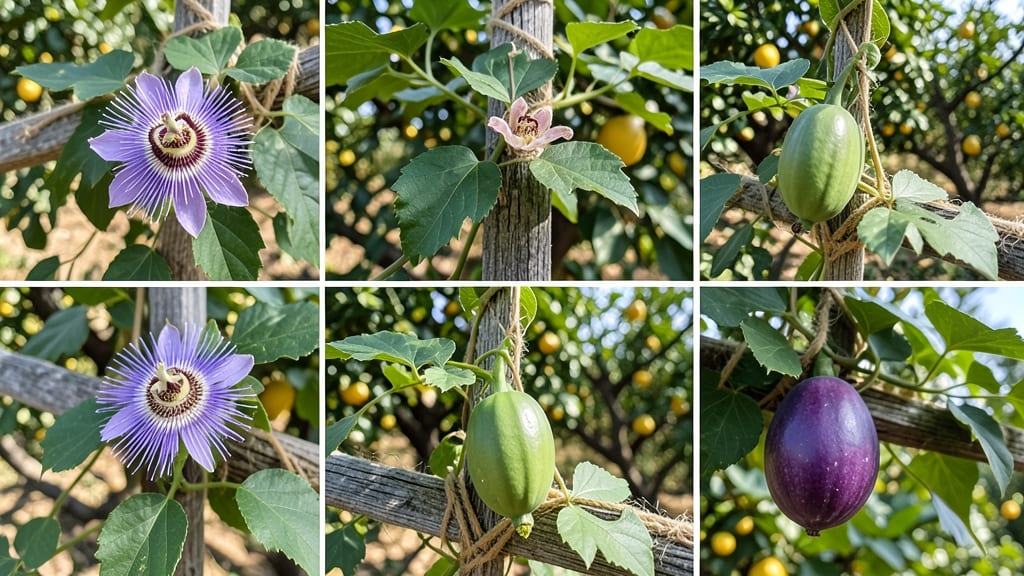
There’s nothing quite like watching a passion fruit vine 🍈 transform from its exotic flower into a juicy, tropical fruit—but getting there takes patience, the right conditions, and a little know-how.
If you’ve ever wondered how those delicate blossoms turn into the vibrant fruits we love, you’re in the right place.
From the moment that first flower opens to the day you pluck a ripe fruit from the vine, the journey is full of surprises.
I’ve grown passion fruit in Zones 10-12 (or with winter protection in Zone 9b), and let me tell you—understanding the stages makes all the difference between a bountiful harvest and a vine full of blooms that never set fruit.
In this guide, I’ll walk you through every step—from pollination tricks to troubleshooting common issues like fruit drop. Whether you’re a first-time grower or a seasoned gardener, you’ll learn how to nurture your vine through flowering, fertilization, and ripening for the best-tasting passion fruit possible.
Ready to turn those stunning flowers into a harvest you’ll actually enjoy? Let’s dive into the timeline and secrets that make it happen.
Passion fruit flowering stage: identifying key species and pollination secrets
The passion fruit flowering stage is where the magic happens—your vine’s delicate blooms hold the key to a bountiful harvest. But not all passion fruit varieties flower the same way, and pollination can be tricky if you don’t know the secrets.
Let’s dive into the two most popular types: purple passion fruit (Passiflora edulis) and yellow passion fruit (Passiflora edulis flavicarpa), plus how to ensure those flowers turn into fruit.
First, recognize that flower anatomy is critical. Passion fruit blooms have five petals and a striking crown of filaments (the "corona"), which attracts pollinators. The flower opens in the morning and wilts by noon, giving you a 6-hour window for pollination. Miss this, and you’ll miss the fruit set entirely.
Purple passion fruit typically blooms in warmer months (spring to summer), while yellow varieties may flower year-round in tropical climates. Both produce hermaphroditic flowers, meaning they have both male and female parts—but they still need help to set fruit. This is where pollinators like bees and hummingbirds come in, but sometimes, you’ll need to step in.
Here’s a quick breakdown of what you need to know before diving deeper:
| Variety | Flower Color | Pollination Needs | Fruit Color | Key Growing Tip |
|---|---|---|---|---|
| Purple Passion Fruit | Purple | Bees, hummingbirds, or hand pollination | Purple | Thrives in full sun and cooler nights |
| Yellow Passion Fruit | White/pink | Bees, butterflies, or hand pollination | Yellow | More heat-tolerant; needs consistent water |
| Granadilla (Sweet Granadilla) | White | Hummingbirds or hand pollination | Yellow | Slow-growing; needs trellis support |
🌱 Note: All varieties require 6+ hours of sunlight and well-draining soil.
If you’re growing passion fruit in a low-pollinator environment, like a greenhouse or urban balcony, you’ll need to hand-pollinate the flowers. Here’s how: Use a small paintbrush or cotton swab to gently transfer pollen from the male stamens (the yellow parts) to the female stigma (the central cone).
Do this in the morning when the flower is fresh, and repeat every 2-3 days for optimal fruit set.
But what if your flowers aren’t setting fruit at all? Failed blooms often stem from poor pollination, nutrient deficiencies (like low phosphorus), or temperature stress.
Check for yellowing leaves (a sign of nitrogen deficiency) or drooping flowers (a sign of underwatering). A balanced 10-10-10 fertilizer applied every 4-6 weeks can work wonders.
Another common issue is fruit drop, where young fruits fall off the vine. This usually happens due to inconsistent watering or lack of support. Make sure your vine has a strong trellis and water deeply every 3-5 days during dry spells.
Mulching around the base also helps retain moisture and stabilize soil nutrients.
For maximum fruit production, aim to pollinate every other flower to avoid overburdening the vine. Overloaded vines may drop flowers or produce smaller fruits. And remember: patience is key.
From pollination to harvest, it takes 90-120 days for passion fruit to ripen—so keep an eye on those blooms and give them the care they deserve!
Once you master the flowering stage, you’ll be well on your way to a tropical harvest that rivals the best grocery store finds. Next, we’ll cover the week-by-week growth timeline so you can track your passion fruit’s journey from flower to ripe, ready-to-eat goodness.
Passion fruit growth timeline: Week-by-Week development from flower to ripe fruit
Now that your passion fruit flowers are pollinated, the real magic begins as those tiny fruits start their 90-120 day journey to ripeness. Tracking progress week-by-week helps you spot issues early and maximize your harvest.
The speed of development depends on temperature (ideal: 70-85°F), humidity (60-70%), and sunlight (6+ hours daily). In my Zone 10b garden, yellow varieties ripen about 10 days faster than purple ones due to their heat tolerance.
Here’s what to watch for each week, along with visual cues to track your fruit’s progress. Pro tip: Take weekly photos to compare changes—you’ll be amazed at how quickly those green bulbs transform!
🌱 Passion Fruit Growth Milestones
- 🌸 Week 1-2: Fruit set - Tiny pea-sized fruits form (0.5-1 inch). Flowers wilt and drop as fruits begin swelling. Check: Count fruits to avoid overloading the vine.
- 🍒 Week 3-4: Rapid growth - Fruits double in size (1-2 inches). Skin turns pale green with visible seeds inside. Watch for: Fruit drop if watering is inconsistent.
- 🍈 Week 5-6: Color shift - Purple varieties develop lavender hues; yellows turn cream-colored. Fruits reach 2-3 inches. Action: Prune nearby leaves to improve airflow.
- 🍉 Week 7-8: Texture change - Skin becomes slightly leathery and easier to dent when pressed. Internal seeds darken. Note: This is when pests like passion vine hoppers are most active.
- 🍇 Week 9-10: Final color - Fruits reach full mature color (deep purple/yellow) and 3-4 inches. Stem begins to dry slightly. Test: Gently twist to check readiness.
- 🍈💛 Week 11-12: Harvest time - Fruit detaches easily, skin yields to gentle pressure, and aroma becomes sweet and tropical. Harvest: Pick in morning for best flavor.
🌡️ Pro Tip: Fruits ripen 20% faster in 80°F+ temps but may split in extreme heat.
Environmental factors can speed up or slow down this timeline dramatically. For example, my purple passion fruits took 130 days to ripen last summer when temperatures hit 95°F+—the heat stressed the vines, delaying maturation.
To prevent this, I installed shade cloth (30%) during peak afternoon sun and increased watering to 2 gallons daily. Humidity also plays a role: In dry climates (<30% humidity), fruits may develop thicker skins and take longer to soften.
One of the most exciting moments is when the fruit starts to change color—this is your cue to monitor daily. Purple varieties develop deep magenta streaks while yellows turn golden with green shoulders.
The skin will also yield slightly when pressed with your thumbnail (like a ripe avocado). If you miss this window, the fruit may overripe on the vine, becoming mealy and seedy.
By Week 10, your passion fruits should be ready for harvest if they’ve developed their full color and aroma. To test, gently twist the fruit—it should detach cleanly from the stem.
If it resists, wait another 2-3 days. Harvest in the early morning when sugars are highest. Store unripe fruits at room temperature to finish ripening (they’ll never soften in the fridge!).
Understanding this timeline helps you predict harvests and plan accordingly. For example, if you pollinate flowers in April, expect your first fruits to ripen by late July.
With proper care, a healthy vine can produce 50-100 fruits per season—enough to enjoy fresh passion fruit margaritas and share with neighbors! Next, we’ll cover common issues that can derail this process and how to fix them before it’s too late.