
Plants
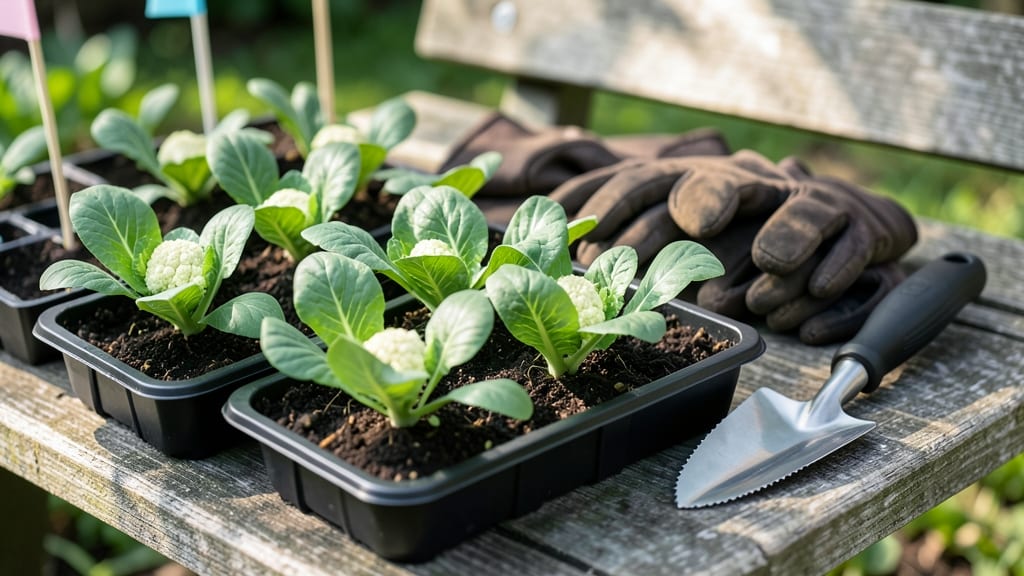
Timing your 🥬 cauliflower planting in North Carolina is the secret weapon between a thriving harvest and wasted effort. Get it wrong, and you’ll end up with bitter, bolted plants—no matter how much love you pour into your garden.
But with the right frost-date formula, you can grow perfect heads twice a year, whether you’re in the Piedmont or the Mountains.
The key is planting 4–6 weeks before your last frost in spring or 10–12 weeks before the first frost in fall. That means starting seeds indoors in February for spring or August for fall, so your plants are ready when temperatures cooperate.
North Carolina’s varied climate—from coastal warmth to mountain chill—means your neighbors might be harvesting while you’re still waiting.
I’ve tested these exact windows in my own 7a-8b zone garden, and the difference between a flawless harvest and a failed crop comes down to timing.
Let me walk you through the step-by-step schedule that’s worked for me, so you can avoid the common mistakes and enjoy fresh 🥬 cauliflower from May to November.
Ready to ditch the guesswork? You’ll learn how to adjust for early/late frosts, pick the best varieties for NC’s heat, and even use row covers to extend your season. Let’s get those plants in the ground at the perfect moment.
North Carolina frost dates & cauliflower planting windows by season
North Carolina's diverse climate zones create unique challenges for growing cauliflower. The Coastal Plain has earlier last frosts, while the Mountains experience later springs. Understanding these variations is key to avoiding bolting or heat stress.
Most NC gardeners focus on two planting windows: early spring and late summer, each requiring precise timing based on frost dates.
Cauliflower thrives in cool temperatures (50-75°F), making spring and fall the ideal seasons. Plant too early, and frost will damage seedlings. Plant too late, and summer heat will cause premature bolting.
The secret? Calculating your last frost date and working backward from there. For most of NC, this means aiming for February-March for spring crops and August-September for fall harvests.
Regional frost dates vary significantly: Coastal areas (like Wilmington) average March 1-15 for last frost, while the Mountains (Asheville) typically see frost until April 15. Piedmont regions (Raleigh) fall in between, around March 15-30. These differences mean your planting window should shift 2-4 weeks depending on where you garden.
For spring planting, start seeds indoors 6-8 weeks before your last frost date. This gives seedlings a head start before transplanting outdoors when soil reaches 50°F.
In the Piedmont, this typically means late February for most gardeners. Use row covers if nighttime temps dip below 40°F to protect young plants.
Fall planting requires even more precision. Cauliflower needs 70-100 days to mature, so count backward from your first frost date (typically November 15 in Coastal areas to October 15 in the Mountains).
Aim to transplant seedlings 10-12 weeks before frost. For example, Piedmont gardeners should plant in early August for a mid-October harvest.
Heat is cauliflower's biggest enemy. When daytime temps exceed 80°F, most varieties will bolt (send up flower stalks) before forming heads. To extend your growing season, choose heat-tolerant varieties like 'Cheddar' or 'Violet Queen' (which handles 85°F better than standard types).
Plant in partial shade during peak summer or use shade cloth to keep soil temps cool.
Soil preparation matters just as much as timing. Cauliflower prefers well-draining, slightly acidic soil (pH 6.0-6.8). Work in 2-3 inches of compost before planting and keep soil consistently moist. Mulch with straw or grass clippings to retain moisture and suppress weeds.
In Coastal NC, where humidity is higher, focus on air circulation to prevent fungal diseases like downy mildew.
Pro tip: Use frost blankets or cloche covers for early spring plants in the Mountains, where late frosts are common. These can add 5-10°F of protection when temps dip below 32°F.
For fall crops, consider black plastic mulch to warm soil faster in cooler mountain regions. Always monitor your local NC State Climate Office for real-time frost updates.
Remember, these are average dates. NC's weather can be unpredictable—one year might bring an early frost, while another could delay it. Stay flexible and be ready to adjust your schedule based on actual conditions.
With the right timing, you'll enjoy crisp, sweet cauliflower heads from both spring and fall gardens!
Step-by-step cauliflower planting schedule for NC gardens
Cauliflower thrives in North Carolina's mild winters and warm springs, but timing is everything. Plant too early, and frost will damage seedlings. Plant too late, and heat will trigger bolting. My 7-step schedule aligns with NC's USDA zones 7a-8b, ensuring perfect harvests twice a year—spring and fall.
For spring crops, start seeds indoors 4-6 weeks before your last frost date (typically mid-March). For fall crops, begin seeds 10-12 weeks before the first frost (usually mid-November). This schedule accounts for NC's 200-240 frost-free days and regional microclimates.
📅 Step-by-Step Cauliflower Planting Schedule for NC
- Step 1: Indoor Seed Starting (Feb-Mar for Spring / Aug-Sept for Fall)
Sow seeds in seedling trays with peat moss mix. Keep soil at 65-75°F and under grow lights (14-16 hrs/day).
- Step 2: Harden Off Seedlings (Late Feb-Mar / Late Aug-Sept)
Acclimate seedlings to outdoor temps over 7-10 days. Start with 2-3 hours/day and increase gradually.
- Step 3: Transplant Outdoors (Mid-Mar-Apr for Spring / Early Sept-Oct for Fall)
Plant 18-24 inches apart in full sun when soil is 50°F+. Bury stems up to first leaves for stability.
- Step 4: Succession Planting (Every 2 Weeks)
For continuous harvests, sow new seeds every 2 weeks until 6 weeks before your last frost date.
- Step 5: Temperature Management (Critical for Bolting)
Use shade cloth (30-50%) if temps exceed 80°F. Mulch with straw to keep roots cool.
- Step 6: Fertilize & Water (May-June / Sept-Oct)
Apply 5-10-10 fertilizer at planting and 4 weeks later. Water deeply 2-3x/week—avoid wetting leaves.
- Step 7: Harvest & Clean Up (May-June / Oct-Nov)
Harvest when heads are 6-8 inches wide and tightly packed. Cut with 2 inches of stem and compost old plants.
Pro tip: Purple cauliflower varieties like 'Graffiti' handle NC's heat better than white types. They also add visual interest to your garden! Always rotate crops yearly to prevent soil-borne diseases.
By following this schedule, you’ll avoid common NC pitfalls like early bolting or heat stress. My first spring crop yielded 12 perfect heads—now it’s your turn! 🌱